
• Plus the Best Products to Make It Easier

    Note: This is a living guide. As I remember additional tips, discover new products, or gain fresh insights from future moves, I’ll update this post. Bookmark it and check back periodically for new information.

    Moving. Just reading that word probably made your stomach tighten a little, didn’t it?

    I’ve moved more times than I care to count. Local moves, cross-country moves, international moves—I’ve experienced them all. And here’s what I’ve learned: every single move is demanding, no matter the distance. Each one takes a toll on you physically, emotionally, and energetically in ways you might not expect until you’re in the thick of it.

    But here’s the good news: with the right preparation, the right mindset, and yes, the right products, you can make the process significantly less painful. Let me walk you through what I’ve learned from all my moves, and share the Amazon products that have genuinely saved me time, energy, and sanity.

    The Energetic Reality of Moving: What Actually Happens to You

    Before we dive into packing tape and boxes, let’s talk about something most moving guides skip entirely: what moving does to you energetically and emotionally.

    Each place you live exists within its own energetic program—its own vibration, its own frequency. When you move, you’re not just changing your address; you’re shifting into an entirely different energy signature. And your body, mind, and spirit all feel it.

    When my family and I moved to Europe last year, we immediately noticed the energy was much lower than what we were accustomed to in the US. Time felt like it was crawling. We found ourselves emanating more energy than the people around us, and oddly enough, we felt hot constantly—something we never experienced back home. The moment we returned to the US just two weeks ago, it was like someone flipped a switch. The energy was higher, faster, more intense. And we felt cold.

    This isn’t just jet lag or climate adjustment. It’s the fundamental energetic difference between locations. Each place vibrates at its own frequency, and when you move, your entire system has to recalibrate. Understanding this helps you be more patient with yourself during the transition period.

    The emotional component is just as real. You’ll love some things about your new place and hate others. That’s the nature of this world—it’s a realm of opposites. No place in the simulacrum is perfect. The sooner you accept that, the easier each move becomes.

    The Three Types of Moves (And How Each One Feels Different)

    1. Local Moves: Short Distance, Still Surprisingly Demanding

    Let me tell you about the time we moved across the street. Literally. One apartment complex to another, just across a busy road.

    I thought it would be a piece of cake. I mean, we could practically wave to our new place from our old balcony. Wrong. So wrong.

    It was still incredibly demanding. We moved from the 2nd floor to the 10th, which alone made the entire process exhausting. And despite the short distance, we still had to rent a truck to safely transport our furniture across that busy road. There’s no way around the logistics of a move, even when you’re moving 200 feet.

    The emotional impact: Local moves have their own unique frustration. You think it should be easy because you’re staying in the same area, but the physical demands are just as real. The advantage? You know the area, you’re not learning a new city, and you can make multiple trips if needed.

    What you’ll need for a local move:

    Since you have the flexibility of proximity, you can prioritize efficiency and multiple trips. Here’s what makes local moves manageable:

    • Heavy-Duty Moving Bags with Handles and Zippers – These are absolute game-changers for clothes, bedding, and soft items. Unlike cardboard boxes, you can reuse them for storage afterward. The ones with reinforced handles can hold 50+ pounds and compress down when you’re done. Buy a 6-8 pack depending on your household size.

    • Mattress Bags with Handles (All Sizes) – I didn’t discover these until recently, and now I’ll never move without them. They completely cover your mattress, protect it from dirt and damage, and the handles mean you can drag it without ever touching the actual mattress. Get the size that matches your bed: Twin, Full, Queen, or King.

    • Clear Plastic Storage Bins with Lids – Here’s my secret: these serve double duty. Use them for moving, then keep using them for storage in your new place. I pack bathroom supplies, cleaning products, and small kitchen items in these. The clear sides mean you can see what’s inside without opening them. Start with 10-15 bins for a 2-bedroom place.

    • Moving Blankets – Protect your furniture from scratches and dings. These are especially crucial for wood furniture and anything with a finish you care about.

    • Furniture Sliders – Save your floors and your back. These let you slide heavy furniture across rooms without lifting. Keep them afterward—you’ll use them every time you want to rearrange.

    2. Cross-State Moves: The Art of Deciding What Matters

    When we made our cross-state move, we faced the big question every long-distance mover confronts: what comes with us, and what stays behind?

    We downsized significantly. The decision-making process was methodical: we considered the cost of each item, how useful it was, how much we could sell it for, and how valuable it would be to someone else if we gave it away. Whatever was high value in all those categories, we kept. The rest we sold if we could, and we gave a lot away.

    Here’s something important I’ve learned about giving: you receive in the same way you give. That’s the universal law. When we gave away quality items to people who genuinely needed them, that generosity came back to us in unexpected ways.

    The emotional impact: This type of move is harder emotionally because distance means finality. You’re not just changing addresses; you’re leaving behind a whole chapter of your life. The farther the distance, the more emotionally demanding it becomes—not necessarily physically, but emotionally. You’re severing connections, changing communities, starting over.

    What you’ll need for a cross-state move:

    Long-distance moves require more strategic packing because everything needs to survive a lengthy journey:

    • Bubble Wrap – 175-350 Feet – Don’t underestimate how much you’ll need. I bought two rolls thinking it would be plenty, and I ran out before I finished my dishes. Get at least 350 feet for a typical household.

    • Packing Paper – 10lb Bundle – This is different from newspaper and won’t leave ink stains on your belongings. Wrap every fragile item, every glass, every plate. A 10-pound bundle contains about 320 sheets.

    • TV Box for Flat Screens – If you didn’t keep your original TV box (and who does?), get one of these. They’re specifically designed for modern flat screens and will save you from a cracked screen disaster. They come in various sizes—measure your TV before ordering.

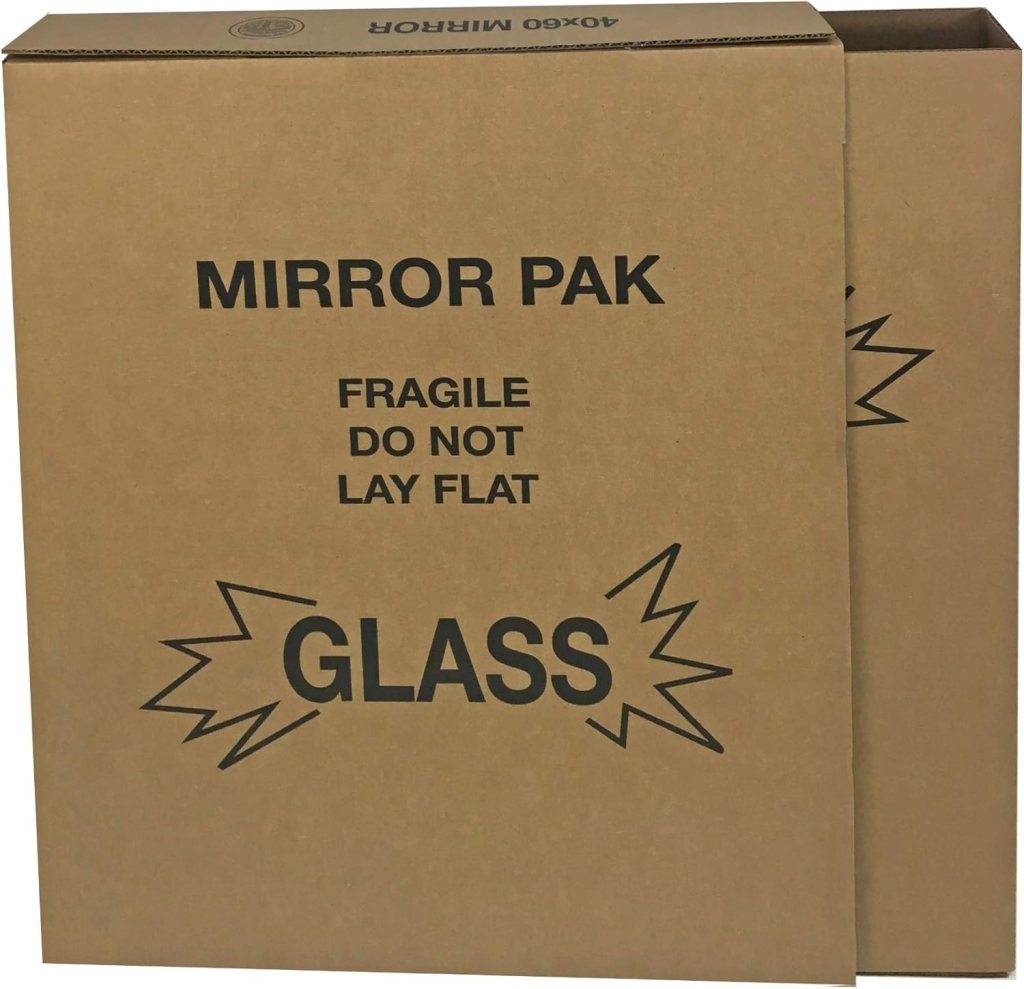
    • Picture and Mirror Boxes – These telescoping boxes protect your framed art, mirrors, and photos. Don’t just wrap these items in blankets—they need rigid protection.
    • Vacuum Storage Bags – Compress clothing, bedding, and linens to save massive amounts of space. Get a variety pack with different sizes. These can reduce the volume of soft goods by 75%.

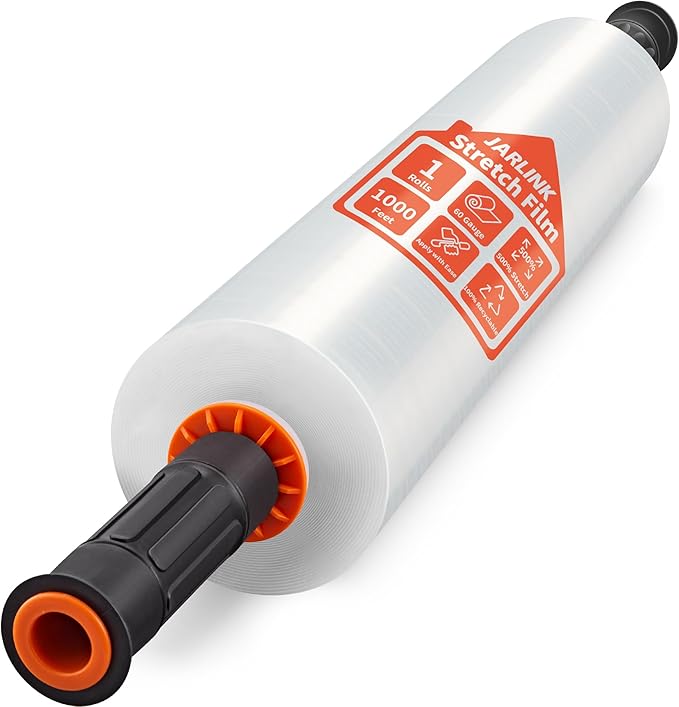
    • Stretch Wrap – 1000 Feet – This stuff is magic. Wrap furniture with drawers to keep the drawers from sliding out during transport. I even leave items inside drawers and wrap the whole piece. It’s also perfect for bundling related items together.
    • Permanent Markers – Bold Tip, Multi-Pack – Label EVERYTHING. And I mean everything. Write the room name and a detailed list of contents on each box. Don’t just write “kitchen”—write “kitchen – everyday dishes, coffee mugs, utensils.” You’ll thank yourself later.

    • Dolly and Hand Truck – Rent or buy. Seriously. Moving heavy items without a dolly is unnecessary punishment. If you have appliances, get an appliance dolly with a strap system.

    3. International Moves: A Complete Energy Shift

    Moving abroad is unlike anything else. Last year, we moved to Europe for a year, and we just got back two weeks ago. For an international move, we had to completely reimagine what we needed.

    We gave away all our furniture to people who needed it. In Europe, particularly, you don’t rent from companies—you rent from people. And those apartments come fully furnished, often with everything you need to live there, from dishes to linens to appliances.

    The emotional challenge: As funny as it sounds, we missed Amazon. We’re so accustomed to ordering what we need and getting it quickly. Not all European countries have Amazon, and the ones that do don’t have the same efficiency we’re used to in the US. That’s a small thing, but it’s those small conveniences you don’t realize you depend on until they’re gone.

    Emotionally, moving to a vastly different culture is always challenging. You’ll love certain aspects and struggle with others. When we returned to the US, we faced a different challenge entirely: buying everything again. Starting from scratch. Again.

    What you’ll need for an international move:

    International moves are about smart packing and practical essentials for your transition:

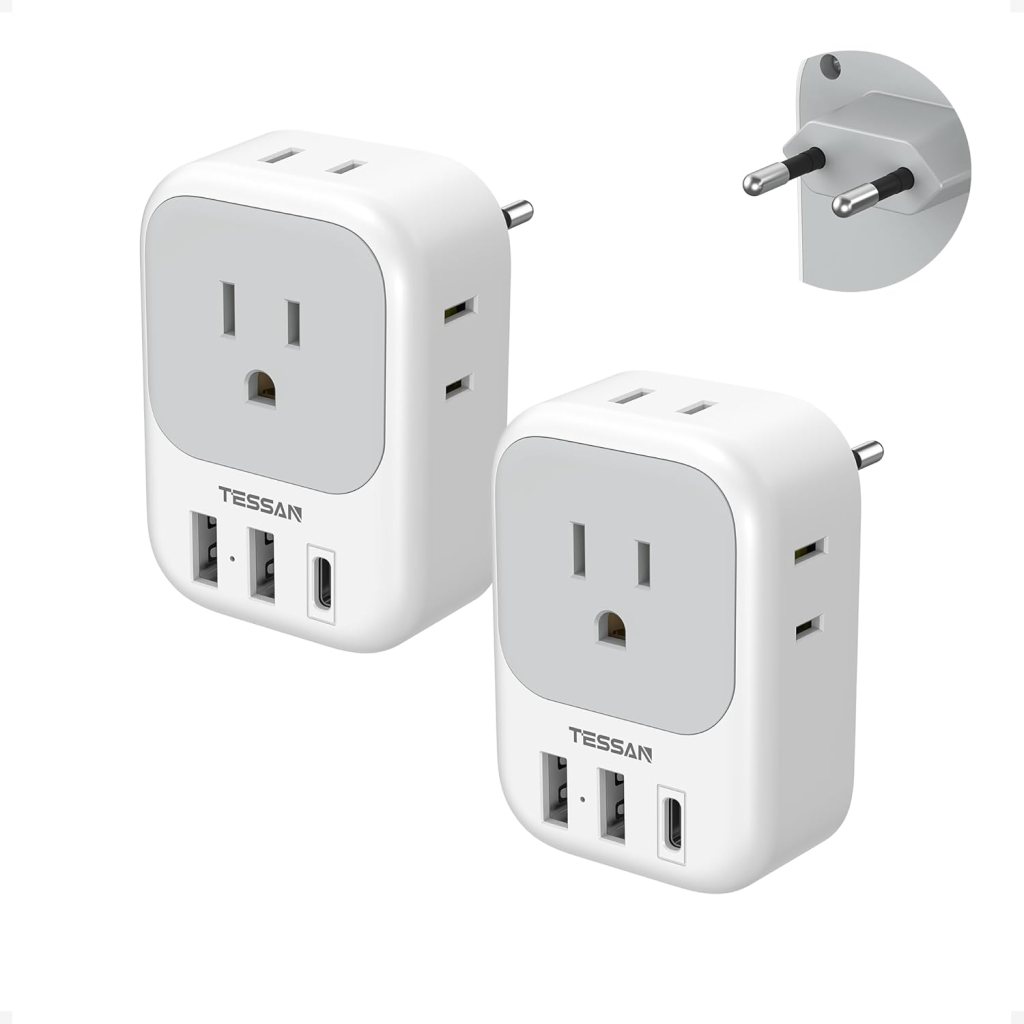
    • EU Plug Adapters with USB Ports – This is NON-NEGOTIABLE if you’re moving to Europe. Get adapters that turn one European Type C outlet into multiple US outlets plus USB ports. Look for ones with 3-4 outlets and 2-3 USB ports (including USB-C). Buy at least 2-3 adapters. These work in most European countries including Spain, Italy, France, Germany, Portugal, Iceland, Netherlands, Greece, and more. NOTE: They don’t work in UK, Ireland, or Scotland—those require Type G adapters.
    • Compression Packing Cubes – For international moves, you’re likely living out of suitcases. Packing cubes keep everything organized and maximize luggage space. Get a set with different sizes.

    • Digital Luggage Scale – Avoid overweight baggage fees. These portable scales let you weigh your luggage before heading to the airport.

    • Universal Travel Adapter (Worldwide) – If you’re moving somewhere other than Europe, get a universal adapter that covers US, UK, EU, and AU plugs. Look for ones with multiple USB ports.

    • International Voltage Converter (If Needed) – Important: plug adapters don’t convert voltage. If you’re bringing high-wattage devices like hair dryers or straighteners, check if they support 110-240V dual voltage. If not, you need a voltage converter. Most modern electronics (phones, laptops) are dual voltage, but check before you plug them in.

    • TSA-Approved Luggage Locks – Protect your belongings during international transit. Get several—you’ll use them on multiple bags.

    • Document Organizer with RFID Protection – Keep your passport, visa documents, travel insurance, and other critical papers safe and organized. RFID protection prevents electronic theft of your information.

    Moving Checklists

    Your Complete Moving Timeline: Before, During & After

    Moving is overwhelming when you try to hold everything in your head at once. Break it down into these three phases, and suddenly it becomes manageable.

    Before the Move: Preparation Checklist

    6-8 Weeks Before:

    • Research and book your moving company or rent a moving truck
    • Start decluttering—go room by room and decide what’s coming with you
    • Create a moving binder or digital folder for all important documents (contracts, receipts, inventory lists)
    • Order packing supplies (boxes, tape, bubble wrap, markers, etc.)
    • Notify your landlord if you’re renting (check your lease for required notice period)
    • Start using up pantry items and freezer food—less to move or waste
    • Research your new area (grocery stores, doctors, veterinarians, etc.)

    4 Weeks Before:

    • Confirm moving dates with your moving company or truck rental
    • Start packing items you don’t use daily (off-season clothes, books, decorations)
    • Label every box with room name and detailed contents
    • Take photos of valuable items and electronics setups (especially cable configurations)
    • Schedule utility disconnections at your old place
    • Schedule utility connections at your new place
    • Update your address with USPS (submit change of address form)
    • If moving internationally, confirm visa requirements, passport validity, and travel documents

    2 Weeks Before:

    • Notify important parties of your address change (bank, credit cards, insurance, subscriptions, employer, IRS)
    • Confirm moving day details with your moving company
    • Pack most of your belongings, leaving only daily essentials
    • Defrost freezer if moving appliances (do this at least 24 hours before)
    • Arrange for childcare and pet care on moving day
    • Get copies of medical and dental records, prescriptions
    • Back up computer files and important digital data
    • If moving internationally, notify your phone carrier and arrange international plans

    1 Week Before:

    • Pack your “First Day/Night Essentials Box” (keep this with you, not on the truck)
    • Clean out your refrigerator and pantry
    • Confirm moving day arrangements one final time
    • Fill any necessary prescriptions
    • Withdraw some cash for tips and unexpected expenses
    • Charge all devices fully
    • Take final meter readings for utilities

    Moving Day Eve:

    • Pack remaining items except absolute essentials for the morning
    • Prepare your bed for one last sleep (or sleep on an air mattress)
    • Set aside clothes for moving day
    • Double-check that your essentials box is ready
    • Get a good night’s sleep (seriously—you’ll need the energy)

    During the Move: Day-Of Checklist

    Morning:

    • Eat a good breakfast (you won’t have time later)
    • Do a final walkthrough of every room, closet, cabinet, and drawer
    • Check behind doors, under beds, in the garage, storage areas
    • Take final photos of the empty space (especially if renting—proof of condition)
    • Meet the movers or pick up your rental truck
    • Keep important documents, valuables, and essentials box with you at all times

    Throughout Moving Day:

    • Stay hydrated—keep water bottles accessible
    • Direct movers or helpers clearly about what goes where
    • Keep your phone charged and accessible
    • Take periodic breaks—moving is physically demanding
    • Do a final check of all rooms before leaving
    • Lock all windows and doors
    • Turn off lights, thermostat, water
    • Take final meter readings
    • Drop off keys as required

    At Your New Place:

    • Verify all your items arrived (check against your inventory)
    • Direct placement of furniture before boxes pile up
    • Check for any damage immediately and document it
    • Test all utilities (water, electricity, gas, internet)
    • Locate your essentials box immediately
    • Make beds first—you’ll want them ready when exhaustion hits
    • Know where your toilet paper is

    After the Move: Settling In Checklist

    First 24-48 Hours:

    • Unpack essentials box completely
    • Set up beds and bathroom necessities
    • Unpack kitchen basics so you can eat
    • Test all appliances
    • Locate fuse box, water main shutoff, and emergency exits
    • Walk around the neighborhood to orient yourself
    • Find the nearest grocery store, pharmacy, gas station
    • Set up wifi and essential technology
    • Take care of yourself—order food if you’re too exhausted to cook

    First Week:

    • Unpack room by room—don’t try to do everything at once
    • Register your vehicle if you moved to a new state
    • Update your driver’s license if required
    • Register to vote in your new location
    • Find your new doctors, dentist, veterinarian
    • Introduce yourself to neighbors
    • Locate important services (hospital, police, fire department)
    • Set up trash and recycling service if needed
    • Test smoke detectors and carbon monoxide detectors
    • Change locks if desired (or confirm landlord changed them)

    First Month:

    • Finish unpacking all remaining boxes
    • Update your address with any remaining institutions
    • Get familiar with local public transportation (if applicable)
    • Explore your new area—find your favorite spots
    • Join local community groups or online neighborhood forums
    • Update your emergency contacts with your new address
    • Schedule any required vehicle inspections for your new state
    • If international, register with local authorities if required, open a local bank account, get a local phone number
    • Properly dispose of packing materials (recycle boxes or offer them to others who are moving)
    • Do something to celebrate—you survived the move!

    Ongoing:

    • Give yourself time to adjust—it takes weeks or even months to feel settled
    • Be patient with the emotional and energetic recalibration process
    • Reach out to people—building a new community takes effort
    • Keep important moving documents for at least a year (receipts, inventory, contracts)
    • If you stored items, schedule retrieval or decide if you actually need them

    Pro Tips for Every Phase

    • Take photos of everything: Your old place empty, your new place before you move in, how electronics are connected, damage to items during the move—photos are your best protection and memory aid.
    • The essentials box is non-negotiable: Phone chargers, toilet paper, paper towels, basic toiletries, change of clothes, medications, important documents, snacks, water bottles, basic tools, and anything else you need to function for 24 hours without unpacking.
    • Label obsessively, but smartly: Don’t just write “kitchen.” Write “kitchen – everyday dishes, coffee maker, mugs, silverware.” Your future self will thank you at 9 PM when you desperately need a coffee mug.
    • Protect your energy: Moving is physically, emotionally, and energetically exhausting. Don’t schedule anything important for several days after your move. Give yourself recovery time.
    • Accept help, but be specific: People often offer to help but don’t know what you need. Give specific tasks: “Can you pack my books on Saturday?” or “Can you watch my kids on moving day?”
    • The 80/20 rule applies: You’ll use 20% of your items 80% of the time. Unpack that 20% first (clothes, toiletries, kitchen basics, work essentials). The rest can wait.

    Remember: these checklists are guides, not rigid requirements. Every move is different. Adapt them to your specific situation, and don’t beat yourself up if you don’t check every box. The goal is progress, not perfection.

    Universal Moving Essentials (No Matter What Type of Move)

    Some products are essential regardless of where you’re moving or how far:

    • Ziplock Bags – Variety Pack – From quart to gallon to 2.5-gallon sizes. These are perfect for hardware, small parts, junk drawer contents, cords, and anything small that could get lost. Label them with a marker.
    • Cable Organizers and Ties – Wrap and label all cables before packing electronics. Nothing is more frustrating than a box full of tangled mystery cables.
    • First Day/Night Essentials Box Kit – Pack this box last, load it last (so it comes off first). Include toilet paper, paper towels, basic cleaning supplies, phone chargers, a change of clothes, toiletries, medications, important documents, and snacks. Label it clearly in red: “OPEN FIRST.”
    • Heavy-Duty Trash Bags – Use them for trash as you pack (moving is the perfect time to purge!), for packing soft items like pillows and stuffed animals, and for protecting items from dust and moisture.
    • Tool Kit with Basics – You’ll need screwdrivers, Allen wrenches, and other tools for disassembling and reassembling furniture. Keep this with you during the move, not packed away.
    • Touch-Up Paint Pens – If you’re leaving a rental, these can help cover minor wall damage and increase your chances of getting your deposit back.

    The Mental Preparation Matters as Much as the Physical

    Here’s what I want you to understand: although moving is stressful and takes enormous amounts of energy, good preparation makes it so much easier.

    Research is crucial. Don’t wait until moving day to figure out what you need. Get supplies ahead of time. Read reviews. Order early so you’re not panicking the night before.

    But also, be gentle with yourself. Moving is one of life’s most stressful events for a reason. You’re not just transporting objects—you’re transitioning between entire chapters of your life, between different energetic programs, between different versions of yourself.

    Take breaks. Stay hydrated. Ask for help. And remember: the chaos is temporary. In a few weeks, you’ll be settled in, and this will all be behind you.

    My Final Moving Wisdom

    After all these moves, here’s what I know for certain:

    1. You’ll always need more supplies than you think. Whatever you think you need, double it.
    2. Label obsessively. Your future self will be grateful.
    3. Give generously. What you give comes back to you.
    4. Accept the energetic shift. Your body needs time to adjust to a new place. Be patient with yourself.
    5. Do your research. Every move has unique requirements. Don’t assume.
    6. Start early. Packing always takes longer than you expect.
    7. Keep important items with you. Don’t pack your passport, medications, or valuables in the moving truck.

    Moving is hard. There’s no way around that truth. But with the right preparation, the right tools, and the right mindset, you can move through it (pun intended) with much less stress and much more grace.

    Now go order those supplies, make your plan, and take a deep breath. You’ve got this.

    Note: As an Amazon Associate, I earn from qualifying purchases. All products mentioned are ones I’ve personally used or researched extensively for moving purposes.


  • The Hidden Psychology Behind Chronic Dissatisfaction

    We tell ourselves a comforting lie: that our chronic dissatisfaction is a personal failing, a cognitive error to be corrected. We pathologize the restless yearning that makes us believe others have it better, labeling it “grass is greener syndrome” as if it were a malfunction of perception. But what if this relentless comparative dissatisfaction isn’t a glitch in human psychology—what if it’s the very mechanism that made us human in the first place? What if the cure we’re seeking would strip away the engine of our species’ extraordinary success?

    Consider this: every ancestor of yours who felt perfectly content with their cave, their hunting grounds, their tribal status—their genes likely died with them. Meanwhile, the dissatisfied ones, the ones who looked across the valley and wondered if life might be better there, who gazed at the stars and invented gods and agriculture and civilization—those restless malcontents are your direct lineage. The grass is greener syndrome isn’t a modern pathology amplified by social media; it’s an ancient adaptive strategy that we’ve only recently decided to treat as a disease.

    The real matrix we need to escape isn’t the one that makes us compare ourselves to others. It’s the one that insists we shouldn’t.

    The Evolutionary Paradox of Satisfaction

    Natural selection operates on a brutally simple principle: organisms that leave more offspring win. In this game, satisfaction is a losing strategy. The contented animal doesn’t expand its territory, doesn’t seek new food sources, doesn’t innovate when conditions change. Contentment, in evolutionary terms, is stagnation wearing a smile.

    Neuroscience reveals this uncomfortable truth at the cellular level. The brain’s reward system—powered by dopamine—is fundamentally designed around prediction error, not satisfaction. When something exceeds expectations, dopamine surges. When reality matches prediction, the signal flatlines. This isn’t a bug; it’s the core algorithm. As neuroscientist Robert Sapolsky notes, “Dopamine is not about pleasure—it’s about the anticipation of pleasure, about the pursuit.” The moment you achieve what you wanted, your neurochemistry immediately recalibrates, establishing a new baseline. The hedonic treadmill isn’t something you can step off; it’s the ground beneath your feet.

    This explains why lottery winners return to their baseline happiness within months, and why achieving that dream job, relationship, or body brings a satisfaction that evaporates like morning dew. We interpret this as personal weakness—if only we could be more grateful, more mindful, more present. But we’re fighting against millions of years of selection pressure that ruthlessly eliminated every ancestor who figured out how to be permanently satisfied.

    The Buddhists understood this millennia before we had fMRI machines. The Second Noble Truth declares that the root of suffering is tanha—often translated as “craving” but more accurately understood as “thirst that cannot be quenched.” But here’s where Buddhist philosophy and evolutionary biology diverge dramatically: Buddhism offers this diagnosis as a path to liberation through acceptance and non-attachment. Evolution offers no such escape—it simply reveals that this unquenchable thirst is precisely what kept you alive long enough to read these words.

    Social Comparison: The Double-Edged Sword We Can’t Sheathe

    Leon Festinger’s social comparison theory describes how we evaluate ourselves through the lens of others, but it stops short of asking the crucial question: why are we built this way? The standard answer—that we need to assess our relative standing—is unsatisfyingly circular. A deeper look reveals something more profound.

    Human beings are the only species that can imagine counterfactual realities. When you see someone with a better job, relationship, or life circumstance, you’re not merely observing a fact—you’re running a complex simulation of an alternative version of your own existence. This capacity for mental time travel and scenario modeling is the cognitive foundation of our dominance as a species. It’s what allows us to plan, to strategize, to innovate. But it comes with an inescapable cost: we can always imagine ourselves in someone else’s position, and our brain treats these simulations as data points for comparison.

    Carl Jung wrote, “The meeting of two personalities is like the contact of two chemical substances: if there is any reaction, both are transformed.” But in the modern world, we don’t just meet two personalities—we encounter thousands daily through screens, each interaction leaving a residue of comparison. Social media didn’t create comparative thinking; it simply weaponized a mechanism that was already our most powerful cognitive tool and our deepest source of suffering.

    Here’s the uncomfortable truth that positive psychology tends to gloss over: upward social comparison—looking at those “above” you—is painful but motivating. It drives achievement, innovation, and self-improvement. Downward comparison—looking at those “below” you—feels good but breeds complacency. The very mechanism that causes our dissatisfaction is inseparable from the one that drives our ambition. You cannot have one without the other.

    Philosopher Søren Kierkegaard captured this paradox brilliantly: “Comparison is the thief of joy.” True enough. But comparison is also the midwife of progress, the spark of creativity, and the foundation of aspiration. To eliminate comparison from human psychology would be to lobotomize the species.

    The Myth of the Present Moment

    The mindfulness movement offers an elegant solution to the grass is greener syndrome: live in the present moment, practice gratitude, focus on what you have rather than what you lack. This advice is simultaneously profound and profoundly insufficient.

    Eckhart Tolle’s “The Power of Now” has sold millions of copies by promising liberation from psychological time—from the regret of the past and the anxiety of the future. But humans are the species that colonized every continent precisely because we don’t live in the present moment. We plan harvests six months ahead, build structures that will outlast our grandchildren, and sacrifice present pleasure for future gain in ways no other animal can imagine.

    The present moment is where animals live. The past and future are where humans dwell.

    This isn’t to dismiss mindfulness—there’s robust evidence that meditation practices can reduce anxiety and increase wellbeing. But the prescription to “be present” as a cure for comparative dissatisfaction misses a crucial point: the ability to project yourself into alternative futures and simulate different life paths isn’t a deviation from proper human functioning. It is proper human functioning.

    Marcus Aurelius, writing his Meditations as Rome’s emperor, understood this tension: “You have power over your mind—not outside events. Realize this, and you will find strength.” Notice what he doesn’t say: that you can eliminate the mind’s tendency to wander, to compare, to imagine alternatives. He speaks instead of power over the mind, acknowledging its turbulent nature rather than promising its pacification.

    The Stoics, despite their reputation for austere acceptance, were not advocating for passive contentment. Epictetus was a former slave who became one of history’s most influential philosophers precisely because he refused to accept his circumstances as final. The Stoic practice of negative visualization—imagining loss to appreciate what you have—is itself a form of comparative thinking, just directed strategically.

    The Commitment Problem: Why Settling Is Rational and Impossible

    Modern psychology frames the grass is greener syndrome as a “fear of commitment,” pathologizing the inability to settle. But from a decision-theory perspective, the reluctance to commit to suboptimal choices is perfectly rational—perhaps the only rational response to uncertainty.

    Consider the paradox at the heart of committed relationships, careers, and life paths: you can only discover whether a choice was correct by committing to it fully enough to experience its true nature. But once you’ve committed that deeply, the sunk costs—emotional, temporal, financial—make it almost impossible to objectively evaluate whether an alternative would have been better. You’re trapped in what economists call an “information cascade” where your past decisions influence your interpretation of present circumstances.

    The dating world illuminates this brutally. Dating apps create what psychologists call “choice overload”—the paradoxical finding that more options lead to less satisfaction. But this isn’t irrational; it’s a reasonable response to changed informational conditions. When your grandparents chose each other from among a few dozen possibilities in their small town, committing wasn’t agonizing—the counterfactuals were limited and known. When you’re swiping through thousands of potential partners, each with curated profiles highlighting their best selves, your brain is doing exactly what it evolved to do: recognizing that you lack sufficient information to determine the optimal choice.

    Friedrich Nietzsche observed, “He who has a why to live can bear almost any how.” We invert this, thinking that finding the perfect “how”—the right job, partner, city, lifestyle—will provide the “why.” But meaning doesn’t emerge from optimal circumstances. It emerges from the decision to extract meaning from whatever circumstances you inhabit. This is the one insight where ancient wisdom and modern psychology actually align: meaning is constructed, not discovered.

    The Dark Side of Self-Optimization

    The contemporary solution to grass-is-greener thinking has become a new form of the same disease: relentless self-optimization. Can’t appreciate your current circumstances? Try gratitude journaling. Still dissatisfied? Add meditation, therapy, exercise, better nutrition, optimized sleep. The self-help industrial complex has transformed the cure into another object of comparison: now you can feel inadequate not only about your circumstances but about your inability to properly appreciate them.

    This meta-level comparison—judging yourself for judging yourself—is perhaps the cruelest trap of all. You’re not just falling short of others’ achievements; you’re failing at the very techniques designed to help you stop caring about falling short. As psychologist Carl Rogers warned, “The curious paradox is that when I accept myself just as I am, then I can change.” But we’ve twisted this into a new imperative: change yourself into someone who can accept themselves.

    The Taoist concept of wu wei—effortless action, non-striving—points toward a different possibility. Not the elimination of dissatisfaction, but the cessation of the secondary struggle against dissatisfaction itself. Lao Tzu wrote, “Nature does not hurry, yet everything is accomplished.” But we’ve built a civilization predicated on the opposite principle: hurry toward accomplishment, and perhaps you’ll approach nature’s effortlessness.

    Here’s the trap: every technique for reducing comparative thinking requires comparison to implement. You can’t practice gratitude without mentally contrasting what you have against what you lack. You can’t cultivate present-moment awareness without noticing how often your mind wanders to past and future. You can’t reduce social comparison without tracking your progress at… reducing social comparison.

    Beyond Cure: Living With Sacred Discontent

    What if we’ve been asking the wrong question? Not “How do I cure my grass-is-greener thinking?” but “What would I do with my discontent if I stopped treating it as a problem to be solved?”

    The artist’s struggle with their work, the scientist’s dissatisfaction with current theories, the activist’s rage at injustice—these are all forms of the grass-is-greener instinct channeled into creation rather than consumption. The difference isn’t the presence or absence of comparative dissatisfaction; it’s the direction in which that energy flows.

    Rainer Maria Rilke, in his “Letters to a Young Poet,” offered advice that applies far beyond poetry: “Perhaps all the dragons in our lives are princesses who are only waiting to see us act, just once, with beauty and courage. Perhaps everything that frightens us is, in its deepest essence, something helpless that wants our love.” What if your chronic dissatisfaction isn’t a dragon to be slain but a princess in disguise—not a malfunction but a signal, not a curse but a compass pointing toward your unlived potential?

    The question then becomes not whether the grass is actually greener elsewhere, but whether you have the courage to tend your own patch with the intensity you’ve been reserving for imaginary alternatives. This isn’t acceptance in the sense of resignation. It’s acceptance in the sense of receiving—receiving your dissatisfaction as information, as energy, as the raw material of transformation.

    The Unanswerable Question

    Perhaps the deepest truth about the grass-is-greener phenomenon is that it’s fundamentally unanswerable. You can never know if the other path would have been better, because taking it means abandoning this one. The multiverse of your possible lives exists only in imagination, at least from our current perspective, and imagination is simultaneously our species’ greatest power and most reliable torturer.

    So we return, finally, to the question that has no comfortable answer: If your dissatisfaction is both the engine of your achievement and the source of your suffering, if comparison is both the thief of joy and the spark of growth, if the present moment offers peace but the temporal expanse of past and future makes you human—what then?

    Not contentment. Not elimination of desire. But perhaps something stranger: the cultivation of what we might call sacred discontent—the discontent that builds rather than corrodes, that motivates rather than paralyzes, that acknowledges the grass might indeed be greener elsewhere while choosing to plant seeds here anyway.

    Can you hold the paradox without resolving it? Can you be both ambitious and grateful, both striving and accepting, both dissatisfied and at peace? Can you look across the fence at greener grass and think, “Yes, that looks beautiful—and so does this,” without collapsing into either complacency or despair?

    That, perhaps, is the only question worth answering. And the answer can only be lived, never spoken.

  • The Paradox of Empty Hands

    We live in an age obsessed with manifestation, yet plagued by a curious irony: the person who can manifest a parking spot, a chance encounter, or even a free coffee seems utterly incapable of manifesting rent money. The individual who “accidentally” attracts toxic relationships with clockwork precision cannot, for the life of them, attract a stable job. This isn’t mere bad luck or cosmic oversight—it’s a profound revelation about the architecture of human consciousness and the machinery of reality itself.

    The popular manifestation narrative tells us to “ask the universe” and “align our energy,” but these platitudes obscure a more uncomfortable truth: we are not failing to manifest our needs—we are succeeding brilliantly at manifesting our deepest, most unconscious beliefs about ourselves. The universe isn’t withholding; it’s a perfect mirror. And what it reflects back is not what we consciously want, but what we subconsciously believe we deserve, what we secretly fear we are, and what we’ve been conditioned to expect since childhood. To understand why genuine needs elude us while unwanted patterns repeat endlessly is to peer behind the curtain of consensus reality and confront the ghost in our own machine.

    The Tyranny of the Survival Self

    At the core of this paradox lies a fundamental misunderstanding about the nature of need itself. Modern manifestation culture, borrowing liberally from both quantum mysticism and positive psychology, suggests that all desires are created equal—that manifesting a luxury car requires the same energetic recipe as manifesting food security. This is demonstrably false, and the reason illuminates something profound about human psychology.

    When we operate from genuine need—from deficit, from survival mode, from the primal layers of Maslow’s hierarchy—our nervous system activates an entirely different program. Fear-based desire doesn’t feel like desire at all; it feels like desperation. And desperation, neuroscientifically speaking, narrows our perceptual field, activates threat-detection systems, and floods our decision-making apparatus with cortisol and adrenaline. As psychologist Daniel Kahneman demonstrated in his work on cognitive biases, scarcity literally makes us stupid—it reduces cognitive bandwidth, impairs judgment, and creates a feedback loop of poor decisions.

    But here’s where it gets philosophically interesting: this biological response isn’t a bug; it’s a feature. Carl Jung wrote, “Until you make the unconscious conscious, it will direct your life and you will call it fate.” When you need something desperately—when your survival feels contingent on obtaining it—you broadcast not the frequency of abundance, but the frequency of lack. You don’t attract what you need; you attract more experiences that confirm your belief in scarcity. The universe, operating as a neutral feedback mechanism rather than a benevolent parent, gives you exactly what you’re energetically prepared to receive: more evidence that you are someone who struggles, who lacks, who must fight for scraps.

    This is why the homeless person manifests more homelessness, why the chronically broke manifest more financial catastrophe, why the lonely attract more loneliness. Not because they’re doing manifestation “wrong,” but because their entire psychosomatic system is calibrated to survival threat. They’re not manifesting from their prefrontal cortex; they’re manifesting from their amygdala. And the amygdala doesn’t create—it replicates known patterns of danger to keep you vigilant, to keep you “safe” in the reality you already know, even if that reality is painful.

    The Hidden Intelligence of Unwanted Manifestations

    Consider now the opposite phenomenon: the things we don’t want, yet manifest with remarkable consistency. The job we hate that we keep getting hired for. The relationship dynamic we swore we’d never repeat. The financial crisis that arrives like clockwork every few years. These aren’t accidents or cosmic pranks—they’re messages, written in the only language the unconscious knows: repetition.

    Freud called this the “repetition compulsion”—the unconscious drive to recreate painful scenarios from our past in a futile attempt to master them. But we can frame this more generously: unwanted manifestations are the psyche’s way of pointing us toward unresolved material. As Friedrich Nietzsche observed, “In every real man a child is hidden that wants to play.” That child—that wounded, adaptive self we constructed in response to early trauma or conditioning—is still running the show, still trying to resolve ancient dilemmas by recreating their conditions.

    When you repeatedly manifest financial instability, for instance, you’re not cursed—you’re unconsciously completing a pattern. Perhaps scarcity was your family’s religion, the water you swam in, the air you breathed. Financial struggle became your identity, your proof of belonging, your strange form of loyalty to your origins. To manifest abundance would be to betray your tribe, to become unrecognizable to yourself, to venture into unknown psychological territory where you have no map. Better the devil you know. So your unconscious faithfully manifests what’s familiar, even if it’s painful, because the brain prefers predictable pain over unpredictable pleasure.

    This is the shadow work that manifestation gurus rarely discuss: you must befriend your unwanted manifestations, not resist them. They are breadcrumbs leading back to the moment you decided something false about yourself—that you weren’t worthy, that you were too much, that love was conditional, that safety required self-abandonment. Marcus Aurelius wrote, “The impediment to action advances action. What stands in the way becomes the way.” Your obstacles aren’t blocking your manifestation; they are your manifestation, showing you precisely where your consciousness needs liberation.

    The Energetic Signature of Authenticity

    So how do we distinguish between a genuine need and a fear-dressed-as-need? How do we know if we’re manifesting from wholeness or wound? The answer lies not in the mind, but in the body—that ancient, honest instrument that cannot be fooled by spiritual bypassing or positive affirmations.

    Genuine needs arise from a place of somatic calm, even when they’re urgent. There’s a difference between “I need to eat because I’m hungry” and “I need to eat expensive food to prove I’m successful.” The first creates a clear, purposeful pull—your body knows what it needs and communicates this without drama. The second creates tension, anxiety, performance pressure—the signature of fear-based desire masquerading as necessity.

    Somatic psychology has demonstrated that the body holds memory and truth in ways the conceptual mind cannot access. When you think about a genuine need—say, safe housing—and you scan your body, you’ll typically notice a sense of groundedness, perhaps urgency but not panic, a clarity of purpose. There’s alignment between what you’re asking for and who you are. But when you think about a fear-based desire—say, needing a luxury apartment to prove your worth—your body tells a different story: tightness in the chest, shallow breathing, a quality of grasping or striving, a sense that your very identity depends on this external thing.

    This is because fear-based desires aren’t really about the object itself—they’re about filling an internal void, proving something, avoiding a feeling, or maintaining a defensive identity structure. Bessel van der Kolk, in his groundbreaking work on trauma, showed that “the body keeps the score.” Your soma knows when you’re lying to yourself. It knows when you’re chasing someone else’s definition of success, when you’re trying to manifest from an Instagram aesthetic rather than from your actual values, when you’re confusing wants with needs because culture told you what to desire.

    The Alchemy of Redirection

    But there’s another layer to this mystery that the manifestation-industrial complex rarely touches: sometimes the universe—or the deeper intelligence of your own higher self—protects you by not giving you what you think you need. This is perhaps the most difficult teaching to accept when you’re in genuine struggle, when you’ve done the inner work, when you’re exhausted from “aligning your energy,” and still, nothing arrives.

    Lao Tzu understood this when he wrote, “When I let go of what I am, I become what I might be.” Sometimes the job you desperately needed to manifest doesn’t come because accepting it would have meant abandoning your true calling. Sometimes the relationship you begged for doesn’t materialize because you needed to learn to be whole alone first. Sometimes the money doesn’t show up because you were meant to discover that your deepest fear—of poverty, of worthlessness—was a paper tiger all along, and your real treasure was learning to feel safe in uncertainty.

    This isn’t spiritual bypassing or toxic positivity. It’s recognizing that we exist within multiple timeframes simultaneously: the urgent now of survival needs, and the longer arc of soul development. Your conscious self operates in the former; your unconscious wisdom operates in the latter. And sometimes these two selves have different agendas. Your ego wants the quick fix, the external validation, the thing that will finally make you feel safe. Your deeper self wants your liberation—even if liberation requires walking through the very fire you’ve been trying to avoid.

    This is why spiritual traditions across cultures emphasize surrender—not as passive resignation, but as radical trust in a larger intelligence. The Bhagavad Gita teaches “yogah karmasu kaushalam”—yoga is skill in action, but also relinquishing attachment to fruits. You act with full commitment, you tend your internal garden, you show up for your manifestation—and simultaneously, you release your death grip on the outcome, trusting that what arrives (or doesn’t) serves your becoming in ways your limited perspective cannot yet comprehend.

    The Somatic Revolution: Manifesting from the Body Up

    If we accept that genuine manifestation requires alignment between conscious desire, unconscious belief, and somatic truth, then the path forward becomes clear—and radically different from what popular manifestation teaches. We must begin not with vision boards and affirmations, but with befriending our bodies, excavating our genuine needs from beneath layers of conditioning, and learning to discern the subtle difference between fear’s urgent whisper and truth’s calm knowing.

    This means practicing what Peter Levine calls “somatic experiencing”—dropping beneath the story level of “I need this thing” and into the felt sense of what’s actually happening in your system. It means asking, when a desire arises: Does my jaw clench? Do my shoulders rise? Does my breathing become shallow? Or do I sense an opening, a yes that comes from my center, a feeling of rightness even if the path is uncertain?

    It means employing the “5 Whys” technique not just intellectually, but somatically. “I want to manifest a new car.” Why? “To feel confident.” Notice your body as you say this. Why do you need confidence from a car? “Because I feel overlooked.” What happens in your chest when you admit this? Why do you feel overlooked? “Because I don’t feel valued.” Breathe into that. Where is the pain of not feeling valued located? Keep following the breadcrumbs until you arrive at the original wound—the moment the story began that you weren’t enough as you are.

    This is the real work of manifestation: not manipulating external reality with willpower and wishful thinking, but excavating and rewriting the internal source code that generates your experience. Jung again: “Who looks outside, dreams; who looks inside, awakes.” The person who awakens to their true needs—not society’s needs, not their wounded child’s desperate strategies, but their authentic requirements for thriving—discovers something remarkable: those needs begin to meet themselves, often in unexpected ways, because they’re finally asking the right questions.

    Beyond the Manifestation Matrix

    We’ve been sold a lie about manifestation—that it’s a cosmic vending machine where correct thoughts dispense desired outcomes. This kindergarten spirituality fails spectacularly when confronted with real human complexity: trauma, systemic oppression, neurodivergence, chronic illness, intergenerational poverty. You cannot simply “raise your vibration” out of structural inequality or think your way through legitimate nervous system dysregulation.

    But there’s a deeper truth beneath the new-age superficiality: we are, indeed, participating in the creation of our experienced reality, not through magical thinking, but through the lens of attention, the filter of belief, and the stories we tell about what’s possible. Cognitive science confirms that we don’t perceive reality objectively—we perceive what our predictive models expect to see, filtered through our past experiences and current nervous system state. We literally live in different worlds based on different internal configurations.

    So the question isn’t whether manifestation “works”—it’s recognizing that you’re already manifesting constantly, unconsciously, automatically, based on your deepest held beliefs about reality, self, and possibility. The question is: are you manifesting from your conditioning or from your consciousness? From your wounds or from your wholeness? From the frightened child who learned to survive or from the essential self that existed before the world told you who you should be?

    The path out of the manifestation paradox isn’t more techniques or stronger willpower—it’s radical self-honesty. It’s the willingness to sit with your body and ask: “What do I actually need right now, beneath what I think I want? What am I afraid would happen if I received it? What identity would I have to release? What family loyalty would I betray? What comfortable suffering would I have to surrender?”

    And perhaps most radically: “What if not manifesting this thing is the manifestation—the universe’s strange mercy, redirecting me toward something I can’t yet see, teaching me through absence what presence never could?”

    This is the wisdom tradition’s understanding of manifestation, stripped of its commercial packaging: you cannot attract what you haven’t become. And becoming is not a matter of affirmations or vision boards—it’s the slow, patient work of integrating your shadow, befriending your body, questioning your assumptions, and learning to hear the difference between desire that arises from lack and desire that emerges from fullness.

    The person who can finally manifest their genuine needs is not the person who learned better manifestation techniques. It’s the person who stopped abandoning themselves long enough to discover what they actually needed. And that discovery is not the beginning of manifestation—it’s the manifestation itself, already complete.

  • Understanding why your body chooses to shed hair during stress, aging, and menopause—and the radical approach that works with your biology, not against it

    The Crisis You Can See Coming

    We are taught to believe that hair loss is a problem—a deficiency, a disease, something that needs fixing. But what if I told you that your thinning hair isn’t a malfunction at all? What if it’s the most honest conversation your body has ever attempted with you, and you’ve been too busy shopping for solutions to actually listen?

    Consider this: your hair doesn’t fall out because it’s weak. It falls out because your body, in its ancient wisdom, has made a calculated decision that growing hair is less important than surviving the war you’re waging against yourself. Every strand that abandons your scalp is a white flag, a desperate signal that something deeper—something you’ve been expertly ignoring—demands your attention. The mainstream narrative wants you to believe in topical salvation: minoxidil, supplements, LED therapy. And yes, these work. But they work the way painkillers work for a broken leg—they address the scream, not the fracture.

    The matrix of modern medicine has conditioned us to treat symptoms as the disease itself. We’ve become a civilization of people treating effect while cause runs wild in the basement. Your hair loss isn’t happening to you. It’s happening for you.

    The Body as Truth-Teller

    Let’s begin with what the research actually shows, stripped of its clinical detachment. When you experience chronic stress—whether from external circumstances, hormonal shifts during menopause, or the accumulating weight of decades lived in a society that demands constant performance—your body initiates a ruthless triage protocol. Cortisol floods your system, not because your body has malfunctioned, but because it’s attempting to keep you alive.

    Here’s what they don’t emphasize in the dermatology journals: elevated cortisol doesn’t just “disrupt the hair growth cycle” as a side effect. It actively shuts down non-essential biological processes to redirect energy toward immediate survival functions. Your body is making a choice. Hair growth requires tremendous metabolic resources—protein synthesis, cell division, nutrient allocation. When your nervous system perceives threat (and chronic stress is perceived as endless threat), it performs emergency economics.

    The hair follicle doesn’t die; it goes dormant. It enters telogen phase prematurely, a biological hibernation. This is not failure. This is your body saying: “We cannot afford the luxury of vanity when survival is at stake.”

    Carl Jung wrote, “Until you make the unconscious conscious, it will direct your life and you will call it fate.” Your hair loss is unconscious becoming conscious. It’s your body creating a visible crisis because you’ve ignored the invisible one.

    The Menopause Revelation

    For women over fifty, menopause introduces a second layer of biological honesty. Declining estrogen and progesterone, coupled with relatively increased androgens, shifts the hormonal landscape. The conventional narrative frames this as loss—loss of youth, fertility, femininity. But consider the anthropological perspective: menopause evolved as an adaptive advantage, freeing women from reproductive burden to assume roles as wisdom-keepers, teachers, leaders.

    The hair thinning that accompanies this transition isn’t a design flaw. It’s a renegotiation of resource allocation. Your body is no longer investing in the biological advertisement of fertility. It’s redirecting those resources inward. The tragedy isn’t the hair loss itself—it’s that we live in a culture that has convinced women that their value is inseparable from their hair.

    Marcus Aurelius observed, “You have power over your mind—not outside events. Realize this, and you will find strength.” The outside event is menopause. The mind is your interpretation of what it means.

    When you treat menopausal hair loss with minoxidil, zinc, red light therapy—you’re not reversing a disease. You’re providing external support so your body can afford the metabolic cost of hair growth again. You’re supplementing its economy. And this works, as you’ve discovered. But it works better when you simultaneously address why the economy crashed in the first place.

    The Stress-Inflammation-Loss Triangle

    Recent research reveals something profound: chronic stress doesn’t just raise cortisol—it triggers systemic inflammation. This inflammatory cascade affects every tissue system, including hair follicles. But here’s what’s rarely discussed: inflammation is not inherently destructive. It’s the body’s repair mechanism.

    When you experience stress, your body initiates inflammation because it’s preparing for injury. It’s an anticipatory response based on millennia of evolution where stress meant physical danger. Your body is trying to heal wounds that haven’t happened yet, burning through resources in preparation for a tiger attack that never comes—because the tiger is your inbox, your mortgage, your existential dread about mortality.

    Nietzsche wrote, “There is always some madness in love. But there is also always some reason in madness.” There is reason in your body’s madness. The inflammation, the cortisol, the hair loss—these aren’t errors. They’re reasonable responses to unreasonable circumstances.

    This is why your combination approach is working. Red light therapy (photobiomodulation) reduces inflammation at the cellular level, stimulating mitochondrial function in follicle cells. Zinc supports immune regulation and reduces inflammatory markers. CBD modulates the endocannabinoid system, which regulates stress response and inflammation. Hair growth capsules (likely containing biotin, collagen, vitamins) provide the raw materials. You’re not fighting your body—you’re finally supporting what it’s been trying to do all along.

    What the Scalp Knows

    Your scalp is not separate from your mind. The same tissue that forms your brain in utero forms your skin. They are, quite literally, cousins. When you massage your scalp, you’re not just increasing blood flow—you’re stimulating the peripheral nervous system, sending signals through your vagus nerve that tell your brain: “We are safe. We can afford to grow.”

    This is why daily scalp massage, performed with intention, works on multiple levels simultaneously. Mechanically, it increases circulation. Neurologically, it activates the parasympathetic nervous system—the rest-and-digest mode where growth happens. Psychologically, it’s an act of self-care that contradicts the narrative of scarcity and threat.

    The monks who practice meditation report increased hair thickness not because prayer grows hair, but because deep meditative states reduce cortisol, lower inflammation, and shift the body into anabolic (building) rather than catabolic (breaking down) metabolism. You don’t need to be spiritual to access this. You just need to convince your nervous system that the emergency is over.

    Lao Tzu wrote in the Tao Te Ching: “Do you have the patience to wait till your mud settles and the water is clear?” Your body is asking you the same question.

    The Protocol They Won’t Prescribe

    So what does a protocol look like when you understand hair loss as information rather than malfunction? It’s a multi-layered approach that addresses both the physical depletion and the deeper conversation your body is trying to have.

    Red light therapy isn’t just “stimulating follicles.” You’re performing cellular-level nervous system regulation. You’re telling your mitochondria that energy is abundant, growth is safe. The photobiomodulation penetrates tissue and activates repair mechanisms that chronic stress has suppressed.

    Zinc and hair growth supplements aren’t fixing a simple deficiency—they’re replenishing a depleted treasury. Your body has been spending reserves it didn’t have. You’re ending an artificial famine by restoring the raw materials needed for protein synthesis and cellular division.

    CBD modulates the master regulatory system that governs stress response, inflammation, and homeostasis. You’re not masking symptoms—you’re helping your body find equilibrium again, giving the endocannabinoid system the support it needs to regulate what stress has dysregulated.

    Beyond these foundational interventions, add these elements that address the deeper conversation:

    Daily scalp massage (5-10 minutes minimum) performed not as a task but as a meditation. Feel where tension lives in your scalp. That tension is held stress, physical manifestation of mental burden. Release it consciously.

    Deliberate stress reduction practices—not as luxury, but as medicine. Whether meditation, breathwork, yoga, or simply walking in nature, these aren’t optional extras. They’re primary treatment. A 2023 study in Stress & Health demonstrated that mindfulness meditation reduced cortisol by 25% within eight weeks. That reduction allows follicles to exit dormancy.

    Sleep optimization is non-negotiable. Your body performs repair during deep sleep. Consistent 7-9 hour sleep schedules with circadian rhythm alignment (darkness at night, light exposure in morning) regulate hormones more effectively than any supplement.

    Protein and healthy fats—not just supplements, but whole food sources. Your hair is literally made of protein (keratin). Hormones are made from fats. You cannot build what you don’t consume.

    Consider adding these evidence-based tools:

    Recommended Products for Holistic Hair Recovery

    1. Red Light Therapy Device – Medical-grade LED panels that deliver therapeutic wavelengths (660nm and 850nm) to reduce inflammation and stimulate cellular energy production. Use 10-15 minutes daily on the scalp.
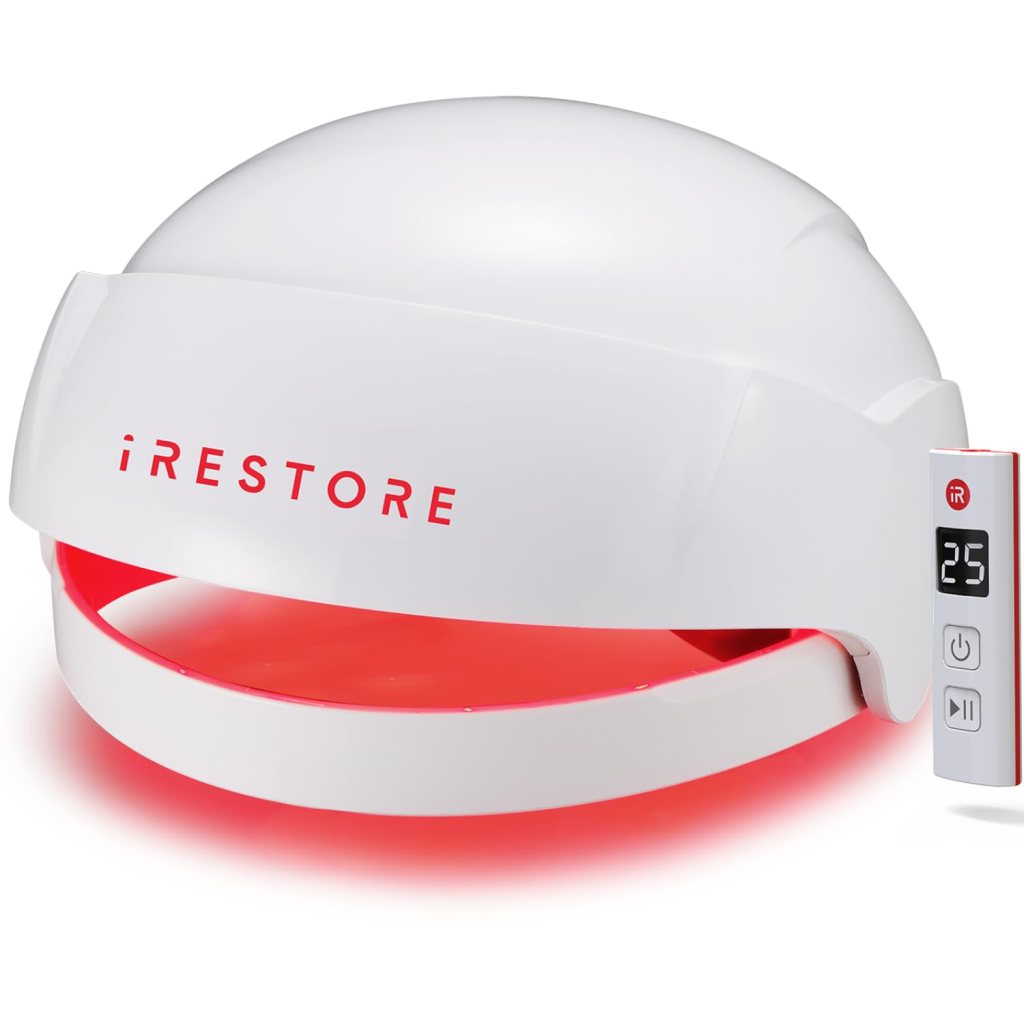
    iRestore Essential – Laser Red Light Therapy for Hair Growth – FDA Cleared Hair Loss, Hair Thinning & Alopecia Treatment for Men & Women – Laser Cap for Hair Regrowth Stimulate Denser Fuller Hair
    1. Biotin + Collagen Complex – Third-party tested supplement combining biotin (5000mcg), marine collagen peptides, and keratin precursors to provide building blocks for hair structure.
    Biotin | Collagen | Hyaluronic Acid | Keratin – Clinically Tested Supplement – Hair Growth Support, Skin & Nails
    1. Scalp Massage Tool – Medical-grade silicone scalp massager designed to stimulate blood flow without damaging follicles. Manual tools work better than electric ones for mindful practice.
    Scalp Massager
    1. Omega-3 + Vitamin D – High-potency fish oil (1000mg EPA/DHA) with Vitamin D3 (5000 IU) to reduce inflammation and support hormone synthesis critical for hair growth.
    Omega 3 Fish Oil Supplement with Vitamin D3 5000 IU
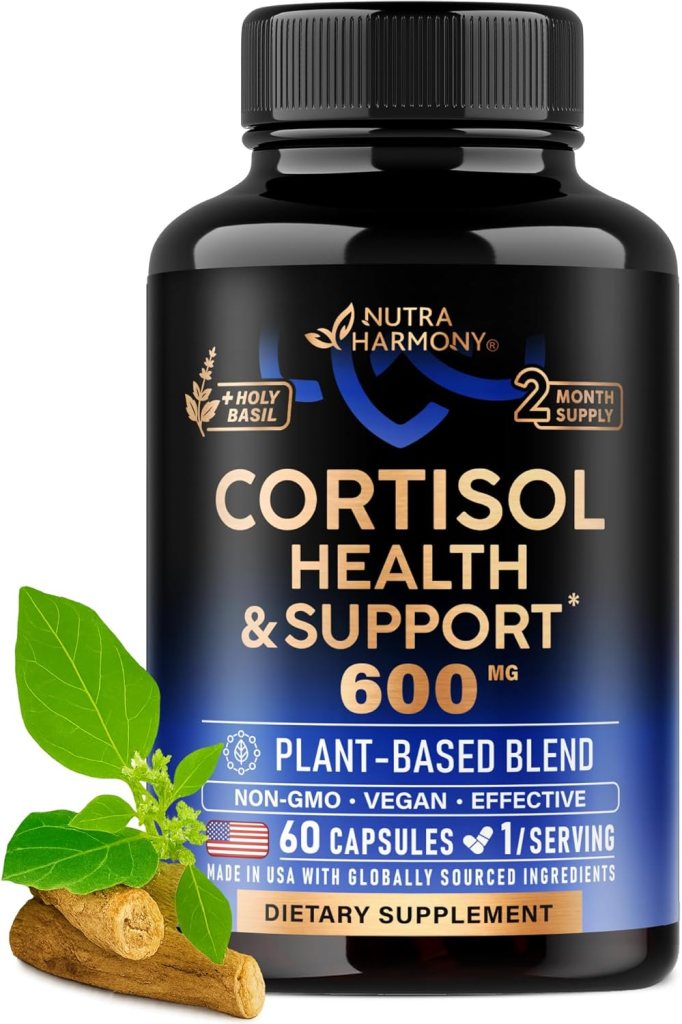
    1. Adaptogenic Stress Formula – Blend of ashwagandha, rhodiola, and holy basil—adaptogens proven to lower cortisol and support the body’s stress resilience at the root level.
    Cortisol Supplement for Women – Holy Basil | Ashwagandha | Rhodiola | L-Theanine

    The Integration Paradox

    Here’s the uncomfortable truth: you can do everything “right” and still lose hair if you don’t address the existential stress underneath. You can take every supplement, use every device, and follow every protocol—but if you’re still waging internal war, your body will continue its triage.

    I know this firsthand. I’ve been going through stressful times—the kind that seep into your bones and announce themselves through thinning hair. I added red light therapy, hair growth capsules, zinc, CBD. And slowly, measurably, it’s getting better. Not because I found magic bullets, but because I finally understood what my body was asking for: support during crisis, not punishment for failing.

    The deepest question isn’t “How do I regrow my hair?” It’s “Why is my body in emergency mode?”

    Is it perimenopause or menopause? Then you’re not in emergency—you’re in transition. Support the transition. Honor it. Your body isn’t failing; it’s transforming. The hair loss is temporary if you work with the change instead of against it.

    Is it stress? Then the hair is simply the messenger. Don’t shoot the messenger. Read the message. What needs to change in your life? What boundary needs to be drawn? What obligation needs to be released? What relationship needs renegotiation?

    Your hair will grow back when you stop fighting the war.

    The Truth No One Sells

    The hair loss industry—worth billions—thrives on your belief that hair loss is a problem external to you, solvable through external intervention. They’re not entirely wrong. External interventions help. You’ve proven that. Red light works. Zinc works. CBD works. Supplements work.

    But they work best when they’re not Band-Aids on a bullet wound. They work when they’re support for a body that’s finally getting what it needed all along: rest, resources, and the radical permission to stop performing constant emergency response.

    The Stoics had a word for this: amor fati—love of fate. Not passive acceptance, but active embrace of what is, including what your body is telling you through hair loss. When you stop resisting the message and start receiving it, something shifts. The desperate grasping releases. The body, feeling heard, can finally stop screaming.

    Your hair is growing back not because you found the right products—though you did. It’s growing back because you’re finally listening.

    The Question That Remains

    If hair loss is your body’s truth-telling, what is it telling you?

    Not generally. Specifically. About your life. Your stress. Your season. Your transformation.

    The answer won’t come from another article or another product. It will come when you sit in silence with your own scalp, your own body, your own accumulated exhaustion, and ask: What do you need from me?

    And then—here’s the truly radical act—you give it.

    The hair will follow. Not because you forced it, but because you finally made space for it to return.

    That’s not a medical protocol. That’s a philosophical revolution. And revolutions, as history shows, always start from within.

  • The Sweet Secret to Youthful Skin

    What Is Erythritol and Why Should You Care?

    If you’ve been following the natural skincare movement, you might have heard whispers about erythritol—a naturally occurring sugar alcohol that’s making waves in facial rejuvenation. But here’s what most people don’t know: this isn’t just another trendy ingredient. Erythritol has been quietly used in Korean skincare for years, and clinical research is now catching up to what beauty enthusiasts have known all along.

    Unlike harsh chemical treatments or expensive procedures, erythritol works with your skin’s natural processes to restore moisture, protect against environmental damage, and improve overall texture. The best part? It’s gentle enough for sensitive skin yet powerful enough to deliver visible results.

    How Erythritol Transforms Your Skin

    Deep Hydration That Actually Lasts

    The secret to youthful skin isn’t complicated—it’s hydration. Erythritol acts as a humectant, meaning it attracts and holds water in your skin. Think of it as a moisture magnet that reduces transepidermal water loss (the fancy term for water escaping from your skin).

    Clinical studies show impressive results. In one 90-day study, 97% of participants reported relief from dryness, improved skin smoothness, and better overall hydration. Objective measurements confirmed what users felt: their skin was genuinely more hydrated and healthier.

    Antioxidant Protection

    Free radicals from pollution, UV rays, and stress constantly attack your skin cells, breaking down collagen and accelerating aging. Erythritol’s antioxidant properties help neutralize these damaging molecules, protecting your skin’s elasticity and firmness. It’s like having a microscopic shield protecting your face throughout the day.

    Soothing and Calming

    If you struggle with redness, irritation, or sensitive skin, erythritol might become your new best friend. It has natural soothing properties that calm inflammation and reduce irritation—perfect for mature or reactive skin types.

    The Cooling Effect

    Beyond the science, erythritol provides a pleasant cooling sensation when applied to skin. This isn’t just about feeling refreshed; that cooling effect can help reduce puffiness and give your skin an immediate revitalized appearance.

    The Clinical Evidence

    Let’s talk numbers. Research shows that consistent use of erythritol-based moisturizers over 90 days leads to:

    • Significant improvement in skin hydration (measured scientifically)
    • Relief from dryness, roughness, and peeling
    • Reduced itching and improved smoothness
    • Excellent tolerability with virtually no adverse effects
    • 100% of study participants rated the products as excellent or good

    The key here is consistency. The best results appeared after about three months of regular application, typically once or twice daily. Research on treatment adherence shows that simpler routines work better—once or twice daily application is optimal for both results and compliance.

    Making Your Own Erythritol Face Cream

    Ready to harness erythritol’s benefits? Here’s a simple DIY recipe you can make at home:

    Basic Erythritol Rejuvenating Cream

    Ingredients:

    • 2 tablespoons erythritol powder
    • 3 tablespoons distilled water
    • 2 tablespoons aloe vera gel
    • 1 tablespoon jojoba oil or sweet almond oil
    • 1 tablespoon shea butter
    • 5 drops vitamin E oil
    • 3-5 drops essential oil (optional: lavender or frankincense)

    Instructions:

    1. Dissolve the erythritol in distilled water, stirring until completely dissolved
    2. Melt the shea butter in a double boiler or microwave (low heat)
    3. In a bowl, combine the melted shea butter with jojoba oil
    4. Add the aloe vera gel and mix well
    5. Slowly add the erythritol solution while stirring continuously
    6. Add vitamin E oil and essential oils
    7. Whip the mixture with a hand mixer for 2-3 minutes until creamy
    8. Transfer to a clean, airtight jar

    Storage: Keep refrigerated. Use within 2-3 weeks.

    Application: Apply a small amount to clean, damp skin once or twice daily. Gently massage in upward motions until absorbed.

    Advanced Hydrating Serum

    For a lighter option, try this serum:

    Ingredients:

    • 1 tablespoon erythritol
    • 3 tablespoons distilled water
    • 1 tablespoon glycerin
    • 1 teaspoon hyaluronic acid powder
    • 3 drops vitamin E oil

    Instructions:

    1. Mix erythritol with distilled water until dissolved
    2. Add glycerin and stir well
    3. Sprinkle hyaluronic acid powder slowly while stirring to avoid clumps
    4. Add vitamin E oil
    5. Pour into a dropper bottle

    Application: Apply 3-4 drops to clean face, pat gently, and follow with moisturizer.

    DIY Ingredients You Can Buy on Amazon

    Since erythritol isn’t commonly featured in ready-made skincare, the best approach is to make your own formulations or enhance existing products. Here are the Amazon products you’ll need:

    Pure Erythritol Powder

    Micro Ingredients Erythritol Powder

    • 100% pure, cosmetic/food grade
    • 1, 3, or 6 pound options available
    • Non-GMO and vegan
    • Perfect for DIY skincare formulations
    • Amazon LINK

    Anthony’s Erythritol Granular

    • Fine texture dissolves easily
    • Batch tested and verified
    • 2.5 lb resealable bag
    • Great for mixing into creams
    • Amazon LINK

    Complementary Skincare Ingredients

    Organic Aloe Vera Gel

    • Seven Minerals Organic Aloe Vera Gel (12 oz)
    • 99% pure organic aloe
    • No added color or fragrance
    • Essential base for erythritol serums
    • Amazon LINK

    Jojoba Oil – 100% Pure

    • Cliganic Organic Jojoba Oil (4 oz)
    • Cold-pressed and unrefined
    • Perfect carrier oil for face creams
    • Amazon LINK

    Unrefined Shea Butter

    • Sky Organics Organic Shea Butter (16 oz)
    • Raw, unrefined African shea butter
    • Creates rich, creamy texture
    • Amazon LINK

    Vitamin E Oil

    • Kate Blanc Vitamin E Oil
    • 28,000 IU strength
    • Natural preservative and antioxidant
    • Amazon LINK

    Hyaluronic Acid Powder

    • BulkSupplements Hyaluronic Acid Powder
    • Pharmaceutical grade
    • Boosts hydration when combined with erythritol
    • Amazon LINK

    Korean Skincare to Layer With Your DIY Erythritol Products

    While these don’t contain erythritol, they work beautifully when layered with your DIY erythritol serum:

    COSRX Snail Mucin 96 Power Essence

    • Apply after your erythritol serum
    • Enhances hydration and repair
    • Amazon bestseller with 50,000+ reviews
    • Amazon LINK

    COSRX Hyaluronic Acid Intensive Cream

    • Use as your final moisturizer layer
    • Seals in your erythritol treatment
    • Rich yet non-greasy formula
    • Amazon LINK

    Klairs Supple Preparation Toner

    • Apply before erythritol serum
    • Prepares skin for better absorption
    • Alcohol-free and gentle
    • Amazon LINK

    Storage Containers for Your DIY Creations

    Glass Pump Bottles (4 oz, 2-pack)

    • Amber glass protects ingredients
    • Perfect for serums and lotions
    • BPA-free pumps
    • Amazon LINK

    Glass Jars with Lids (2 oz, 6-pack)

    • Ideal for creams and balms
    • Wide mouth for easy access
    • Dishwasher safe
    • Amazon LINK

    Dropper Bottles (1 oz, 4-pack)

    • Perfect for concentrated serums
    • Dark glass protects from light
    • Professional looking finish
    • Amazon LINK

    Tips for Best Results

    1. Start Slowly: If you have sensitive skin, patch test first. Apply a small amount to your inner wrist and wait 24 hours.
    2. Consistency Is Key: Remember that clinical study? Results showed up after 90 days of regular use. Be patient and stick with it.
    3. Layer Properly: Apply erythritol products to damp skin for better absorption. Follow with an occlusive moisturizer to lock everything in.
    4. Once or Twice Daily: Research shows that simpler routines lead to better adherence and less irritation. Don’t overdo it.
    5. Combine Wisely: Erythritol plays well with other ingredients. In the clinical study, it was combined with ceramides and glycerin for enhanced results.
    6. Keep It Cool: DIY products should be stored in the refrigerator to prevent bacterial growth and extend shelf life.

    Who Should Use Erythritol?

    Erythritol is particularly beneficial for:

    • Dry or dehydrated skin
    • Mature skin showing signs of aging
    • Sensitive or easily irritated skin
    • Anyone in dry climates
    • People seeking gentle, natural alternatives to harsh chemicals

    The Bottom Line

    Erythritol represents a shift in how we think about skincare—away from aggressive interventions and toward supporting the skin’s natural processes. It’s not magic, but it is backed by science and real-world results.

    Whether you choose to make your own formulations or purchase ready-made products, the key is consistency and patience. Give your skin the 90 days it needs to show you what proper hydration and protection can accomplish.

    Your skin has an incredible capacity to renew itself when given the right support. Erythritol might just be the gentle, effective support it’s been asking for all along.

  • Why December is the Perfect Time to Reset Your Mind

    The end of the year arrives like a mirror held up to our lives. As December unfolds, we find ourselves caught between reflection and anticipation, between the weight of what was and the promise of what could be. In these increasingly complex times, where the pace of change seems to accelerate daily and the demands on our attention multiply endlessly, the transition between years offers something precious: a natural pause point.

    This isn’t about New Year’s resolutions that fade by February. This is about entering 2026 with genuine clarity, with patterns recognized and released, with a renewed sense of who you are and where you’re headed.

    The Portal Opens: December 1-5, 2025

    Enter the Portal: 5-Day Mind Reset is a guided online journey designed specifically for this liminal time between years. Over five consecutive days, you’ll step away from the holiday chaos and into a supportive space dedicated entirely to your transformation.

    Program Details at a Glance

    Dates: Monday, December 1 – Friday, December 5, 2025
    Time: 12:00 PM EST / 6:00 PM CET (accessible for both US and European participants)
    Format: Live online sessions via Zoom
    Duration: 1 to 1.5 hours per day
    Group Size: Intimate small group (10-20 participants maximum)


    Investment:

    • Early Bird Special: $168
    • Early Bird Deadline: November 11, 2025
    • Regular Price: $222

    Why End-of-Year Timing Matters

    The Power of Natural Transitions

    December holds unique energy for transformation. Unlike arbitrary starting points, the end of the calendar year provides a culturally recognized moment for reflection and renewal. Your nervous system understands transitions, your psyche responds to closure and new beginnings.

    Before the Noise Gets Louder

    The week of December 1-5 comes before the peak holiday rush. You’re past Thanksgiving, but not yet deep in the intensity of late December. This creates a perfect window to do inner work before family gatherings, year-end obligations, and holiday stress reach their peak.

    Setting Foundations Instead of Making Resolutions

    Most people wait until January 1st to think about change, then wonder why their resolutions fail. By engaging in this reset in early December, you’ll enter 2026 already aligned, already clear, already in motion. You’re not starting from scratch on January 1st—you’re continuing momentum you’ve already built.

    Responding to Increasingly Challenging Times

    We’re living through an era of unprecedented change. Technology evolves faster than we can adapt. Global challenges feel overwhelming. Personal and collective uncertainty seems to be the only constant. In times like these, the most radical act is to pause, to look inward, to choose consciously rather than react unconsciously.

    This reset isn’t about escaping reality—it’s about equipping yourself to navigate it with more clarity, resilience, and authentic choice.

    What Happens During the 5 Days

    Each day builds intentionally on the previous one, creating a coherent journey from where you are now to where you want to be.

    Day 1: Reflect & Release (Monday, December 1)

    The journey begins with honest self-assessment. Through guided journaling, you’ll explore the question “Who am I today?” and identify patterns that feel heavy or outdated. This isn’t about judgment—it’s about recognition.

    You’ll engage in energy release techniques and participate in a symbolic mini-ritual to close old doors. Many participants describe this first day as unexpectedly emotional, in the best way—finally acknowledging what they’ve been carrying allows them to set it down.

    What you’ll gain: Immediate relief from naming what no longer serves you, plus clarity about patterns you’re ready to release.

    Day 2: Connect the Dots (Tuesday, December 2)

    On Day 2, you’ll map your personal journey, identifying recurring patterns, triggers, and lessons that have shaped your life. Through visualization exercises, you’ll trace your timeline, highlighting key moments that reveal deeper themes.

    Breakout discussions allow you to share discoveries in pairs or small groups, creating connection and often surprising insights when you see your story reflected in others’ experiences.

    What you’ll gain: Recognition of how you’ve unconsciously recreated certain patterns, and the first glimpses of how to consciously choose differently.

    Day 3: Mind & Heart Alignment (Wednesday, December 3)

    The midpoint of the journey focuses on integration. Through guided meditation, you’ll strengthen the connection between your intellect and your intuition, learning to distinguish conditioned responses from authentic desires.

    Breathwork and energy anchoring techniques help you embody the clarity you’re discovering, moving insights from concept to felt experience in your body.

    What you’ll gain: A stronger internal compass, clearer sense of what you truly want versus what you think you should want.

    Day 4: Rewrite Your Story (Thursday, December 4)

    This is where transformation becomes tangible. You’ll write new identity statements—”I am…” declarations that reflect the version of yourself you’re becoming. Through detailed visualization, you’ll imagine living this new identity, engaging all your senses to make it real.

    A planting ritual helps you anchor these intentions, creating a symbolic representation of the seeds you’re sowing for 2026.

    What you’ll gain: Clear language for your emerging identity, plus embodied experience of who you’re becoming.

    Day 5: Integration & Next Cycle Prep (Friday, December 5)

    The final day ensures you don’t lose momentum. You’ll review discoveries from the week, address questions and obstacles, and receive practical tools for ongoing integration: journaling prompts, affirmations, and energy exercises.

    The closing circle celebrates your journey and allows you to articulate one clear intention for your next cycle.

    What you’ll gain: Confidence in your ability to sustain change, concrete practices to continue your evolution, and connection with a community that understands your journey.

    What Makes This Different from Other Programs

    Experiential, Not Just Educational

    You won’t just learn about transformation—you’ll experience it. Every session includes practices you do in real-time: journaling, meditation, breathwork, visualization, and ritual. These aren’t lectures about change; they’re active engagement with your own evolution.

    Small Group Intimacy

    With a maximum of 20 participants, this isn’t an anonymous webinar. You’ll be seen, heard, and supported. The small size allows for genuine connection and ensures everyone has space to share. However, it’s up to you how much or how little you participate and engage with the group.

    Adapted for Online Depth

    While online, the program maintains the intimacy and power of in-person work. Breakout rooms create space for vulnerable sharing. Camera-on participation builds connection. The structure honors both the benefits of gathering and the reality that deep inner work often happens best in the privacy of your own space.

    Practical, Immediately Applicable

    You won’t leave this program with vague inspiration that fades. You’ll have specific tools, practices, and language you can use immediately. The journaling prompts, affirmations, and energy techniques become part of your daily life.

    Safe, Confidential Container

    Everything shared in the sessions stays confidential. A clear code of conduct ensures psychological safety. Optional participation via chat accommodates different comfort levels. This is a space where you can be honest about where you are without fear of judgment.

    Who This Is For

    This reset is designed for you if:

    • You feel stuck in patterns you know aren’t serving you anymore
    • You’re exhausted from reacting to life rather than consciously creating it
    • You sense you’re on the edge of a significant shift but can’t quite name it
    • You want to enter 2026 with clarity and intention rather than vague resolutions
    • You’re ready to release old narratives and step into a truer version of yourself
    • You value depth, authenticity, and practical transformation over surface-level motivation
    • You’re willing to look honestly at your life and do the inner work required for real change

    Who This Isn’t For

    This program may not be right for you if:

    • You’re looking for a quick fix or magic solution
    • You’re not ready to examine your patterns and behaviors honestly
    • You prefer purely intellectual understanding without experiential practice
    • You’re seeking crisis intervention (this is transformational work, not therapy)
    • You’re not willing to commit to all five days

    What Participants Need

    Technical Requirements

    • Stable internet connection
    • Zoom capability (desktop, laptop, tablet, or smartphone)
    • Working camera and microphone (camera-on participation strongly encouraged)
    • Quiet, private space where you won’t be interrupted

    Materials

    • Journal or notebook
    • Pen
    • Optional: candles, objects for personal rituals
    • Open mind and willingness to engage

    Time Commitment

    • 1 to 1.5 hours daily, December 1-5
    • 10-15 minutes of optional daily reflection between sessions
    • Ability to be fully present (not multitasking)

    Investment & Early Bird Opportunity

    Regular Investment: $222
    Early Bird Special: $168 (save $54)

    The early bird rate expires on November 11, 2025.

    Why This Pricing?

    This isn’t a passive course you consume at your convenience. It’s a facilitated, live, intimate experience with a maximum of 20 participants. The pricing reflects:

    • Five days of guided, personalized facilitation
    • Small group size ensuring individual attention
    • Pre-session materials and integration toolkit
    • Optional 1:1 follow-up sessions available at $35/hour
    • Years of experience in energy work, transformation, and group facilitation

    Think of this as an investment in your foundation for 2026. What is clarity worth? What is releasing patterns that have held you back for years worth? What is entering a new year already aligned and in motion worth?

    Optional Add-Ons

    1:1 Follow-Up Sessions

    Following the group program, you can book individual sessions at $35/hour to deepen specific aspects of your work, address personal questions, or get support with integration challenges.

    Integration Toolkit

    All participants receive a comprehensive PDF toolkit including:

    • Pre-work PDF
    • Session recordings
    • Post-program PDF with journaling prompts

    What Happens After You Register

    Immediate Confirmation

    You’ll receive an email confirming your registration with:

    • Instructions for creating your sacred space
    • Code of conduct and program guidelines

    Pre-Program Preparation (1 Week Before the Workshop)

    To ensure you receive the full depth of this experience, you’ll begin gentle preparation during the week leading up to December 1st. This pre-program phase is designed to help you arrive grounded, focused, and ready to engage deeply.

    Here’s what you’ll receive and what to prepare:

    1. Preparation PDF (Delivered 1 Week Prior)
      You’ll receive a downloadable guide that includes:
      • An overview of what to expect each day
      • Journaling prompts to open self-reflection
      • Intention-setting questions for the week
      • Practical notes on energy care and self-regulation between sessions
      • Space to outline your personal goals for this reset
    2. Gathering Your Tools
      Before Day 1, ensure you have the following items ready:
      • A dedicated journal or notebook for the 5-day process
      • Several pens or markers for expressive writing and color-coded exercises
      • A calendar or planner for integration reflections
      • Optional: candles, crystals, or objects of personal meaning to create your ritual space
    3. Preparing Your Space
      Set up a quiet, comfortable space where you can be uninterrupted during each live session.
      • Test your lighting and seating for comfort
      • Have a flat surface for journaling nearby
      • Create a peaceful atmosphere—soft lighting, comfortable temperature, perhaps a grounding scent or playlist
    4. Technical Readiness
      • Ensure your internet connection is stable and reliable
      • Test your Zoom access (install or update the app beforehand)
      • Check your camera and microphone functionality
      • Save the Zoom link from your confirmation email for easy access

    You’ll receive a reminder email two days before Day 1 with a short checklist to make sure everything is ready and that your energetic, physical, and digital space supports the depth of the work you’re about to enter.

    Refund Policy

    We honor your investment and your journey:

    • Full refund available up to 7 days before December 1st (November 24th)
    • 50% refund for cancellations within 7 days of start date (November 24th to November 28th)
    • No refunds within 48 hours of Day 1 (November 29th and 30th)
    • If we cancel for any reason, a full refund will be issued

    Frequently Asked Questions

    What if I can’t attend one of the sessions live?

    Sessions are recorded and made available within 24 hours for registered participants. However, the full benefit comes from live participation. If you know you’ll miss a day, please consider joining a future cohort when you can be fully present.

    Is this therapy?

    No. This is a transformational education and experiential program focused on personal growth, self-awareness, and intentional change. It is not a substitute for mental health treatment. If you’re experiencing acute mental health challenges, please seek appropriate professional support.

    What if I get emotional during the sessions?

    Emotional responses are natural and welcome. This work involves examining and releasing patterns, which can bring up feelings. The space is designed to be safe for authentic emotional expression. If you need support, the facilitator and group are there, and you can always take breaks or reach out privately.

    Will the sessions be recorded?

    Yes, with participant consent. You’ll indicate your recording preference during registration. If anyone opts out, we record only the facilitator’s view to protect privacy while still providing reference material.

    What’s the group size?

    We cap enrollment at 20 participants to ensure everyone has space to share, be heard, and receive personalized attention.

    Can I remain anonymous or keep my camera off?

    We strongly encourage camera-on participation for connection and engagement. However, for sensitive exercises, you can participate via chat. Full anonymity isn’t conducive to the depth of work we’re doing together.

    What if I’m not spiritual?

    You don’t need to identify as spiritual to benefit from this work. While the program includes meditation and energy work, these are practical tools for awareness and integration. The approach is experiential and accessible regardless of belief system.

    Will I need to share personal details?

    Sharing is encouraged but never forced. You always have control over what and how much you share. The space is held with deep presence, care, and respect. You are always in full agency of your process — nothing is forced, and every exercise invites reflection rather than exposure. Boundaries are honored as sacred.

    ***This program is for self-development and consciousness work. It is not a substitute for therapy, medical advice, or psychological treatment.***

    The Deeper “Why” Behind This Work

    In a world that constantly demands we adapt, achieve, and accelerate, we rarely create space to ask the fundamental questions: Who am I? What do I actually want? What patterns am I unconsciously repeating? Which version of myself am I becoming?

    December offers a rare gift: a culturally sanctioned moment to pause. But most of us rush through it, letting the holiday season consume us, then arrive at January 1st exhausted and obligated to make resolutions we haven’t truly considered.

    This reset interrupts that pattern. It gives you five days to slow down before the year ends, to do the inner archaeology that reveals what’s actually yours to carry forward and what you’ve been carrying out of habit.

    The old story is closing. Not because the calendar says so, but because you choose to close it.

    The next chapter doesn’t begin on January 1st. It begins the moment you decide to step through the portal.

    A Final Invitation

    Change doesn’t require months or years. Sometimes the most profound shifts happen in concentrated periods of focused attention and intentional practice.

    Five days. December 1-5.

    You can enter 2026 the way most people do—with vague intentions, unexamined patterns, and hope that somehow things will be different.

    Or you can step through the portal.

    Release what no longer serves. Recognize your patterns. Align mind and heart. Rewrite your story. Integrate your transformation.

    The choice, as always, is yours.

    But the early bird seats won’t last, and the portal only opens once this year.

    Enter the Portal: 5-Day Mind Reset
    December 1-5, 2025 | 12 PM EST / 6 PM CET
    Early Bird: $168 until November 11 | Regular: $222

    Your next chapter is waiting.


    Spaces are limited to maintain intimacy and ensure personalized attention. Register early to secure your spot and take advantage of early bird pricing.

    R e g i s t r a t i o n

    ***READ BEFORE REGISTERING***

    Terms, Disclaimer, and Liability Waiver

    Enter the Portal: 5-Day Mind Reset

    1. Purpose of the Program

    This program is designed solely for educational, personal growth, and experiential purposes. It is not therapy, medical, psychological, or psychiatric treatment, and does not replace professional care. Participants are encouraged to consult a qualified professional for any medical, mental health, or other personal concerns.

    2. No Guarantees / Individual Results

    Every participant’s experience is unique. While guidance, tools, and exercises are provided, no specific outcomes are guaranteed. Results depend on your engagement, circumstances, and individual choices.

    3. Personal Responsibility

    By participating, you accept full responsibility for your own well-being. You acknowledge that exercises, reflections, and insights may sometimes produce emotional or psychological discomfort. The facilitator, program creators, and affiliates are not responsible for any personal, emotional, or other outcomes that may arise.

    4. Limitation of Liability

    To the maximum extent permitted by law, the facilitator and program creators are not liable for any direct, indirect, incidental, or consequential damages, including but not limited to physical, emotional, or financial harm, arising from participation in this program. Participation is voluntary, and you assume all risk.

    5. Refunds & Cancellations

    Refunds are governed by the program’s policy:

    • Full refund: up to 7 days before Day 1
    • 50% refund: within 7 days of start
    • No refund: within 48 hours of Day 1

    If the facilitator cancels, participants will receive a full refund or credit toward the next cohort.

    6. Age Requirement

    Participants must be 18 years or older (or the age of majority in their jurisdiction) to register and participate.

    7. Acceptance of Terms

    ***By registering and/or participating, you acknowledge that you have read, understood, and agreed to these terms. Your registration confirms voluntary participation and agreement to accept personal responsibility for your experience.***

    Questions before registering? Email info@missiodeienterprises.com with the subject line “Portal Questions.”

    REGISTRATION IS CLOSED!

  • Let’s be honest: whoever came up with “what doesn’t kill you makes you stronger” clearly never dealt with chronic depression, childhood trauma, or the soul-crushing weight of modern existence. This feel-good platitude has become the ultimate gaslighting tool, convincing people that their suffering should somehow transform them into warriors when really, it just leaves most of us exhausted and wondering why we’re not “stronger” yet.

    The Uncomfortable Truth About Trauma

    Here’s what the wellness industry won’t tell you: trauma doesn’t make you stronger. Trauma makes you traumatized. What might make you stronger—and this is a big might—is the grueling work of processing that trauma, often with professional help, over years or decades.

    The research backs this up, though you won’t see it quoted in motivational Instagram posts. Scientists have identified two types of resilience that can emerge from adversity, but notice the word “can”—not “will.”

    Type 1 resilience is basically not falling apart as much as you statistically should have, given what you’ve been through. It’s the psychological equivalent of still being able to walk after getting hit by a truck. Impressive? Sure. But let’s not pretend getting hit by the truck was good for you.

    Type 2 resilience is actually maintaining some quality of life and satisfaction despite everything. This is rarer and requires specific conditions that most people facing continuous hardship simply don’t have access to.

    The Control Problem

    The dirty secret researchers have uncovered is that whether adversity “strengthens” you depends almost entirely on one factor: control. Manageable stress that you have some power over can build what psychologists call “stress inoculation”—like a miracle pill that helps you handle future challenges.

    But uncontrollable, overwhelming stress? That just breaks people. It creates hypervigilance, learned helplessness, and a nervous system stuck in permanent fight-or-flight mode. The kind of “strength” this produces isn’t resilience—it’s survival mechanisms that often become maladaptive once the immediate threat passes.

    Think about it: if you’re constantly being hit with problems you can’t solve or control, your brain doesn’t learn “I’m strong and capable.” It learns “the world is unpredictable and dangerous, and I need to be ready for the next attack at all times.”

    Why We’re All So Fucking Tired

    The reason continuous problems leave us drained instead of strengthened isn’t because we’re weak—it’s because human beings aren’t designed to function under constant threat. Our stress response system evolved for acute dangers, not the chronic psychological assault of modern life.

    When stressors pile up without breaks, several things happen:

    • Your cortisol levels stay chronically elevated, which literally shrinks parts of your brain
    • Your nervous system gets stuck in dysregulation, making everything feel like a crisis
    • Your cognitive resources become depleted, making even simple decisions feel impossible
    • Your emotional regulation goes to shit because you’re always in survival mode

    This isn’t a bug in the human system—it’s a feature. Overwhelm is your brain’s way of saying “this isn’t sustainable, we need help or we need to stop.” Ignoring that signal and pushing through with positive thinking is like ignoring a fire alarm because you don’t want to deal with evacuating.

    The Myth of Individual Resilience

    Here’s where things get really fucked up: we’ve turned resilience into another thing people have to excel at individually. Can’t bounce back from trauma? Must be your fault for not having enough grit. Still struggling years after a major loss? Clearly you’re not applying the right mindset techniques.

    This is garbage. Resilience isn’t some internal superpower—it’s largely determined by external factors like:

    • Having reliable social support (not just people telling you to “stay strong”)
    • Access to mental healthcare and other resources
    • Financial stability that removes some stress from daily survival
    • Living in communities that don’t systematically traumatize you
    • Having some degree of control over your circumstances

    Most people who appear “resilient” aren’t inherently tougher—they just have better support systems and fewer systemic barriers.

    How to Actually Help Yourself (Without the Bullshit)

    Instead of trying to become stronger through suffering, focus on reducing unnecessary suffering and building genuine support systems:

    Stop Romanticizing Your Pain

    Your trauma doesn’t exist to teach you lessons or make you a better person. Sometimes bad things happen for no reason, and the only meaning they have is the meaning you choose to create—if you want to create any at all.

    Normalize Not Being Okay

    You don’t have to bounce back. You don’t have to find the silver lining. You don’t have to grow from every experience. Sometimes survival is enough, and survival doesn’t look Instagram-ready.

    Build Real Support Networks

    This means people who can sit with you in your mess without trying to fix you or rush you toward healing. It means having practical support when life implodes, not just thoughts and prayers.

    Learn to Identify What You Can Actually Control

    Most of what happens to us is outside our control, but how we respond usually isn’t. Focus your limited energy on the small things you can influence rather than exhausting yourself fighting unchangeable circumstances.

    Get Professional Help Without Shame

    Therapy isn’t a sign of weakness—it’s basic maintenance for a complex biological machine living in an unnatural environment. You wouldn’t feel bad about going to a doctor for a broken bone; don’t feel bad about getting help for a broken brain.

    Accept That Healing Isn’t Linear

    Some days you’ll feel strong. Other days you’ll feel like everything is falling apart. Both can be true. Progress doesn’t mean constant forward movement—it means gradually increasing your capacity to handle life’s inevitable chaos.

    The Real Story

    What doesn’t kill you doesn’t make you stronger. What doesn’t kill you makes you a survivor, and survival is messy, complicated, and rarely looks like the triumphant comeback stories we’re sold.

    Sometimes what doesn’t kill you leaves you with PTSD, chronic anxiety, trust issues, and a nervous system that treats every minor stressor like a life-or-death situation. Sometimes it leaves you grieving parts of yourself that died even though your body lived. Sometimes it just leaves you tired.

    And all of that is okay. You don’t owe anyone strength. You don’t owe anyone growth. You don’t owe anyone a inspiring story about how your pain made you better.

    What you owe yourself is honesty about what you’ve been through, compassion for how it’s affected you, and permission to heal at whatever pace makes sense for your particular brand of human mess.

    The goal isn’t to become invulnerable. The goal is to become whole enough to live a life that feels worth living, scars and all.

    If you’re tired of empty platitudes and need honest guidance, I invite you to take the next step: 👉 Rewrite Yourself — Enter the Portal
    P.S. I am not a medical professional, God forbid! I’m just here to help!

  • Why Ancient Wisdom Points to Liberation Through Disappointment

    What if the very pursuit of happiness—the cornerstone of modern existence—is the primary source of our suffering? This isn’t merely philosophical speculation; it’s a radical proposition that challenges the fundamental assumptions of contemporary life. While our culture preaches the gospel of positive thinking and endless possibility, ancient wisdom traditions understood something we’ve forgotten: expectation itself is the prison, and disappointment is the key.

    The modern world operates on a deceptive premise: that happiness is both achievable and sustainable through the right combination of circumstances, achievements, and experiences. Yet this very assumption creates what we might call the “expectation trap”—a psychological mechanism that guarantees suffering not in spite of our pursuit of happiness, but because of it. To understand why, we must venture beyond the sanitized wisdom of self-help culture and examine what our ancestors knew about the dangerous relationship between desire and fulfillment.

    The Ancient Greeks: Emotional Sobriety as Social Survival

    The ancient Greeks possessed a sophisticated understanding that modern psychology is only beginning to rediscover: emotions, particularly positive ones, pose a fundamental threat to both individual wisdom and social stability. Unlike our contemporary obsession with emotional highs, Greek society recognized that euphoria and excessive joy were not merely personal experiences but dangerous forces that could destabilize the delicate balance of civilization.

    This wasn’t pessimism—it was emotional ecology. The Greeks understood that strong emotions, whether positive or negative, create cognitive distortions that impair judgment. A person in the grip of intense happiness becomes as unreliable as someone consumed by grief. Both states represent departures from the clear thinking necessary for ethical behavior and sound decision-making. This is why their dramatic festivals served as controlled releases—designated spaces where dangerous emotions could be experienced safely, then purged through catharsis.

    The Greek concept of eudaimonia, often mistranslated as happiness, actually referred to something far more profound: human flourishing in alignment with one’s highest nature. This wasn’t about feeling good; it was about being good. The difference is crucial. Feeling good is temporary, subjective, and often based on external circumstances. Being good—living according to virtue and reason—creates a stable foundation that doesn’t depend on the cooperation of an unpredictable world.

    Marcus Aurelius captured this distinction perfectly: “Very little is needed to make a happy life; it is all within yourself, in your way of thinking.” Notice he doesn’t say “very little is needed to feel happy”—he’s pointing to a fundamental reorientation of what happiness means. It’s not an emotional state but a way of being that transcends emotional states entirely.

    The Medieval Paradigm: Deferred Gratification as Spiritual Technology

    Medieval thinkers took this understanding even further, developing what we might call a “spiritual technology” for managing expectations. By relocating true happiness to the afterlife, they weren’t being otherworldly escapists—they were creating a psychological framework that freed individuals from the tyranny of immediate gratification and unrealistic expectations about earthly experience.

    This deferral wasn’t denial; it was strategic wisdom. When you stop expecting this life to provide ultimate satisfaction, you paradoxically become more capable of appreciating what it does offer. The medieval mind understood that expectation corrupts experience. When we approach life with specific demands about what it should provide, we blind ourselves to what it actually contains.

    Consider the medieval practice of courtly love, which celebrated unattainable and unrequited affection. Modern psychology might label this masochistic, but it represented something far more sophisticated: the recognition that desire, not its fulfillment, is the source of life’s most intense experiences. The troubadours weren’t celebrating failure—they were celebrating the purity of longing uncorrupted by possession.

    Thomas Aquinas wrote, “Happiness is nothing other than perfect contemplation of truth.” This isn’t about escaping reality but about seeing it clearly, without the distorting lens of personal desire. When we stop demanding that reality conform to our expectations, we become capable of perceiving its actual nature—which, freed from the burden of our projections, often reveals unexpected beauty and meaning.

    The Stoic Laboratory: Experiments in Expectation Management

    The Stoics developed perhaps the most practical system ever devised for managing expectations, treating philosophy not as abstract speculation but as applied psychology. Their central insight was revolutionary: suffering doesn’t come from external events but from the gap between expectation and reality. Eliminate the gap, and you eliminate the suffering.

    Their practice of praemeditatio malorum—premeditation of evils—represents one of history’s most counterintuitive approaches to happiness. By mentally rehearsing loss, failure, and death, they weren’t being morbid; they were conducting controlled experiments in emotional resilience. When you’ve already imagined losing everything, you become paradoxically free to appreciate what you have without clinging to it desperately.

    Epictetus taught his students to distinguish rigidly between what lies within their control and what doesn’t. This wasn’t merely practical advice—it was a complete reconstruction of human psychology. Most of our suffering comes from trying to control things that are fundamentally beyond our influence: other people’s behavior, external events, even our own emotions. The Stoics realized that the attempt to control the uncontrollable is not just futile—it’s the root of human misery.

    But here’s where Stoicism becomes truly radical: they didn’t advocate for lowered expectations so much as redirected ones. Instead of expecting external circumstances to provide happiness, they placed their expectations entirely on their own responses to those circumstances. This shift transforms every challenge into an opportunity for virtue, every disappointment into a chance to practice wisdom.

    Seneca captured this beautifully: “Every new beginning comes from some other beginning’s end.” He wasn’t offering consolation—he was pointing to a fundamental truth about the nature of existence. Life is constant transition, continuous endings and beginnings. Expecting stability or permanence in this flux is like expecting the ocean to hold still.

    The Neuroscience of Expectation: Modern Validation of Ancient Wisdom

    Recent neuroscientific research has begun to validate what ancient wisdom traditions understood intuitively: the human brain is an expectation-generating machine, and these expectations systematically distort our perception of reality. The brain’s predictive processing creates models of what should happen, then experiences disappointment when reality fails to conform to these models.

    This isn’t a flaw in human psychology—it’s how consciousness works. We don’t experience reality directly; we experience our expectations about reality, constantly updated by sensory input. This means that managing expectations isn’t just philosophical advice—it’s a form of cognitive hygiene essential for mental health.

    The hedonic treadmill, documented extensively in psychological research, demonstrates that humans consistently overestimate both the intensity and duration of future happiness. We imagine that achieving our goals will provide lasting satisfaction, but adaptation mechanisms quickly return us to baseline emotional states. This isn’t failure—it’s how we’re designed. The problem isn’t that happiness is temporary; it’s that we expect it to be permanent.

    The Liberation Hidden in Disappointment

    Here’s the paradigm shift that changes everything: disappointment isn’t the opposite of wisdom—it’s wisdom’s greatest teacher. Every unmet expectation is an invitation to examine the assumptions underlying that expectation. Why did I believe this outcome would bring satisfaction? What story was I telling myself about how life should unfold?

    Disappointment reveals the gap between our mental models and reality’s actual structure. Instead of trying to eliminate this gap by controlling external circumstances, ancient wisdom traditions learned to eliminate it by adjusting the models. This isn’t resignation—it’s precision. When your expectations align with reality’s actual patterns, you stop fighting against the nature of existence and start flowing with it.

    Friedrich Nietzsche, despite his reputation as a destroyer of traditional values, understood this principle: “What does not kill me, makes me stronger.” He wasn’t advocating for suffering—he was pointing to suffering’s transformative potential. Every disappointment that doesn’t destroy us refines our understanding of what’s actually possible and valuable.

    Carl Jung extended this insight: “Everything that irritates us about others can lead us to an understanding of ourselves.” Disappointment with external circumstances often reveals internal assumptions we didn’t know we held. The world becomes a mirror, reflecting back our hidden expectations and giving us the opportunity to examine them consciously.

    The Practice of Expectation Archaeology

    Living according to these principles requires what we might call “expectation archaeology”—the systematic excavation of our unconscious assumptions about how life should unfold. This isn’t therapy; it’s applied philosophy. Every moment of frustration, every experience of disappointment, becomes data about the invisible expectations governing our experience.

    The practice begins with radical honesty about what we actually expect from life, relationships, career, health, and happiness itself. Most of these expectations operate below conscious awareness, inherited from culture, family, and media without critical examination. Bringing them into daylight is the first step toward freedom.

    Next comes the discipline of distinguishing between preferences and expectations. Preferences are gentle; they acknowledge what we’d like while remaining open to alternatives. Expectations are rigid; they demand that reality conform to our desires and create suffering when it doesn’t. The Stoics preferred virtue over vice but never expected virtue to be rewarded or vice to be punished in any particular timeframe.

    Finally, there’s the cultivation of what we might call “informed pessimism”—not cynicism, but the mature recognition that life includes loss, aging, death, and disappointment as fundamental features, not bugs to be eliminated. When we stop demanding that existence provide only pleasant experiences, we become capable of finding meaning and even beauty in its more challenging aspects.

    The Paradox of Effortless Happiness

    The ultimate irony is that happiness becomes accessible precisely when we stop pursuing it directly. This isn’t wordplay—it’s the recognition that happiness, like sleep, comes most readily when we’re focused on something else. The Greeks found it in virtue, the medievals in service to something greater than themselves, the Stoics in the cultivation of wisdom.

    Lao Tzu understood this paradox: “The sage does not attempt anything very big, and thus achieves greatness.” When we stop demanding that life provide specific outcomes, we become available to receive what it actually offers—which is often far more interesting than anything we could have imagined.

    This doesn’t mean becoming passive or abandoning goals. It means holding goals lightly, as experiments rather than destinations. It means finding fulfillment in the process of pursuing meaning rather than in achieving predetermined outcomes. It means discovering that the journey itself can be intrinsically rewarding when we stop insisting that it lead to a particular destination.

    The ancient wisdom traditions weren’t advocating for low expectations—they were pointing toward a form of engagement with life that transcends the expectation-disappointment cycle entirely. They understood that true freedom comes not from getting what we want, but from wanting what emerges from authentic engagement with reality as it actually is.

    In our contemporary moment, surrounded by messages promising that the right technique, product, or mindset will guarantee happiness, this ancient wisdom feels revolutionary. It suggests that our suffering comes not from insufficient optimization but from the attempt to optimize at all. What if, instead of trying to engineer better outcomes, we learned to find meaning in whatever outcomes actually arise?

    This isn’t resignation—it’s the ultimate form of rebellion against a culture that profits from our dissatisfaction. When we stop requiring external validation for our sense of worth, stop demanding that circumstances align with our preferences, stop expecting life to be other than it is, we discover something our ancestors knew: freedom isn’t the ability to control outcomes, but the ability to remain whole regardless of what happens.

    Perhaps the real question isn’t how to be happy, but how to be fully alive in a world that includes both happiness and suffering as temporary visitors in the larger adventure of consciousness itself.

    Click HERE to check out my Enter the Portal programs and specials. I’m here to help!

  • What if the very mechanism designed to keep you alive has become your prison warden? What if the chronic stress you’ve been trying to manage, medicate, and meditate away isn’t actually yours at all, but rather a case of mistaken identity so profound it has shaped the entire architecture of your perceived reality?

    We live in an age obsessed with nervous system regulation, trauma healing, and stress management. Millions of people scroll through social media seeking the next breathwork technique, the perfect meditation app, or the ultimate biohack to finally feel safe in their own skin. But what if this entire enterprise is built on a fundamental misunderstanding—a cosmic case of trying to solve a problem that exists only because we’ve forgotten who we really are?

    The conventional narrative tells us that chronic stress is something we have, something that happens to us as a result of difficult circumstances, genetic predispositions, or past traumas. This narrative keeps us trapped in the role of victim to our own biology, forever at war with our own nervous system. But what emerges when we step outside this framework is far more radical: the possibility that what we call chronic stress is actually consciousness itself, caught in a dream of separation so convincing it has forgotten its own nature.

    The Neurobiology of Illusion

    To understand this deeper truth, we must first examine what modern neuroscience reveals about the nature of perception itself. The predictive processing model, championed by researchers like Andy Clark and Jakob Hohwy, suggests that the brain is not a passive receiver of reality but an active constructor of it. Your brain continuously generates predictions about what it expects to encounter, and these predictions—not raw sensory data—form the basis of your lived experience.

    This means that what you perceive as “out there” is actually an elaborate construction project happening inside your skull. Your nervous system is constantly running simulations, creating what neuroscientist Anil Seth calls a “controlled hallucination” of reality. When this system becomes locked into patterns of threat detection, it doesn’t just filter reality through the lens of danger—it literally constructs a dangerous reality.

    Carl Jung understood this principle long before neuroscience caught up: “Everything that irritates us about others can lead us to an understanding of ourselves.” The irritation isn’t caused by others; it’s a projection of our own inner state. Similarly, the sense of living in an unsafe world isn’t caused by the world—it’s consciousness experiencing itself through the filter of fear-based conditioning.

    But here’s where it gets truly interesting: if your brain is constructing your reality based on predictive models, and those models are based on past experiences rather than present circumstances, then you’re not actually living in the present moment at all. You’re living in a sophisticated reconstruction of the past, projected onto the screen of now.

    The Ancient Prison of Separation

    This isn’t merely a modern problem. The Buddha identified this same pattern over 2,500 years ago when he spoke of maya—the illusion that keeps us trapped in cycles of suffering. What he understood, and what quantum physics is now suggesting, is that separation itself is the fundamental illusion.

    Consider the implications of quantum entanglement, where particles remain mysteriously connected across vast distances, instantaneously affecting each other regardless of space and time. As physicist David Bohm observed, this suggests that separation is not fundamental to reality but rather an artifact of our limited perception. “The notion that all these fragments are separately existent is evidently an illusion,” Bohm wrote, “and this illusion cannot do other than lead to endless conflict and confusion.”

    When consciousness believes itself to be separate—a small, vulnerable self in a vast, potentially hostile universe—it naturally generates what we call survival stress. This isn’t pathology; it’s a logical response to an illusory premise. The problem isn’t that your nervous system is malfunctioning; the problem is that it’s functioning perfectly within a framework of mistaken identity.

    Marcus Aurelius captured this beautifully in his Meditations: “You have power over your mind—not outside events. Realize this, and you will find strength.” The Stoic emperor understood that our suffering comes not from circumstances but from our relationship to circumstances, and that relationship is entirely determined by what we take ourselves to be.

    The Feedback Loop of False Identity

    What makes chronic invisible survival stress so persistent is that it creates its own evidence. When you’re identified with the patterns of hypervigilance, when you believe you are the anxiety rather than the awareness in which anxiety appears, you naturally look for threats to justify your state. And in a world full of genuine challenges, you’ll always find them.

    This creates what systems theorists call a positive feedback loop—not positive in the sense of good, but positive in the sense of self-reinforcing. Your expectation of danger increases your sensitivity to potential threats, which increases your perception of danger, which reinforces your expectation. You become trapped in what philosopher Thomas Nagel might call the “view from somewhere”—but that somewhere is a prison of your own making.

    Friedrich Nietzsche saw through this trap when he wrote, “There are no facts, only interpretations.” The circumstances of your life are not inherently threatening or safe; they become so through the interpretive framework through which you encounter them. And that framework is not fixed—it’s a fluid, malleable construct that can be transformed through the recognition of what you truly are.

    The Paradox of Effortless Effort

    Here we encounter one of the most profound paradoxes of human experience: the harder you try to fix your survival stress, the more you reinforce the very identity that creates it. Every technique you use to manage anxiety subtly confirms that you are someone who has anxiety to manage. Every breathwork session designed to regulate your nervous system reinforces the story that your nervous system needs regulating.

    This is what spiritual teacher Rupert Spira calls “the looking for that which is already looking.” You are seeking peace, safety, and wholeness as if these were states you could acquire, missing the fact that you are the peace in which the seeking appears, the safety in which the fear arises, the wholeness that has never been fragmented.

    Lao Tzu pointed to this understanding in the Tao Te Ching: “The sage does not attempt anything very big, and thus achieves greatness.” The transformation from chronic stress to natural ease doesn’t happen through great effort but through the recognition that the one who would make the effort is itself part of the pattern seeking to be dissolved.

    This doesn’t mean becoming passive or bypassing the legitimate needs of the human organism. If your nervous system is genuinely dysregulated due to trauma, by all means, seek appropriate support. But understand that healing happens not because you fix what’s broken, but because you remember what was never broken in the first place.

    The Space Between Stimulus and Response

    Viktor Frankl, writing from his experience in Nazi concentration camps, observed that “between stimulus and response there is a space. In that space is our power to choose our response. In our response lies our growth and our freedom.” But what Frankl may not have fully articulated is that you are that space.

    You are not the one choosing the response from within the space—you are the space itself in which the entire drama of stimulus and response unfolds. The awareness that reads these words right now has never been stressed, never been anxious, never been threatened. It is the unchanging witness to all changing experiences, the screen on which the movie of your life plays out.

    When this recognition dawns, something extraordinary happens: the survival patterns don’t necessarily disappear immediately, but your relationship to them transforms completely. They become weather patterns moving through the sky of awareness rather than the fundamental truth of your existence. You stop taking them personally because you recognize they are not personal—they are simply energy patterns moving through the field of consciousness.

    Beyond the Dream of Separation

    What we call awakening from chronic survival stress is really awakening from the dream of being a separate self altogether. This awakening doesn’t require years of therapy or decades of meditation, though these practices may naturally unfold as expressions of your true nature. It requires only the recognition of what you already are beneath all the stories, patterns, and identities you’ve been carrying.

    As Nisargadatta Maharaj put it with characteristic directness: “The real does not die, the unreal never lived.” The stress patterns that seem so solid and permanent are actually no more substantial than clouds passing through an empty sky. They arise in you, appear to you, and dissolve back into you, but they are not you.

    This recognition doesn’t make you special or enlightened—it reveals what has always been true. You don’t achieve this understanding; you remember it. You don’t become peace; you recognize that you have never been anything else.

    The Return to Innocence

    The ultimate freedom from chronic invisible survival stress comes not through sophisticated techniques or complex healing modalities, but through the return to the innocence of not-knowing. When you stop knowing yourself as a separate, vulnerable entity requiring protection from life, when you stop knowing the world as inherently dangerous or threatening, what remains is the pure awareness that has been looking through your eyes all along.

    This awareness doesn’t need to survive because it was never born. It doesn’t need to be safe because it has never been threatened. It doesn’t need to be healed because it has never been wounded. In recognizing this, the entire framework within which survival stress operates simply collapses—not through force or effort, but through the gentle recognition that it was never as real as it appeared to be.

    The question that remains is not how to manage your survival stress, but how long you will continue to pretend that you are anything other than the infinite awareness in which all experiences—including the experience of stress—arise and pass away. How long will you continue to play the role of the prisoner when you have always been the space in which the prison appears?

    The door has always been open. You are the one who has been both the lock and the key.

    Want to go deeper? I share tools, guidance, and personal support here:
    Enter the Portal – Rewrite Yourself: https://astraaeternumx.blog/enter-the-portal-rewrite-yourself/

  • The Consciousness Paradox:

    What if the very pursuit of consciousness—this modern obsession with “awakening”—is itself the most sophisticated form of unconsciousness ever devised? What if, in our desperate attempt to transcend the matrix of ordinary experience, we’ve simply constructed a more elaborate prison, one furnished with spiritual concepts and philosophical frameworks that keep us perpetually seeking rather than simply being?

    This isn’t another guide to mindful living or conscious awakening. This is an excavation of the deepest paradox of human existence: that consciousness, as we commonly understand it, might be the very mechanism by which we remain unconscious to what we actually are.

    The Illusion of the Awakened Self

    The contemporary consciousness movement has created what I call the “awakened self”—a new form of identity that’s arguably more rigid than any conventional ego structure it claims to transcend. Carl Jung warned us: “The most terrifying thing is to accept oneself completely.” Yet modern consciousness culture encourages us to accept only a curated version of ourselves—the mindful, aware, spiritually evolved version.

    Consider the neurological evidence: studies using fMRI technology show that when subjects report experiences of “pure awareness” or “consciousness without content,” their default mode network—the brain’s self-referential system—doesn’t disappear but rather reorganizes into more subtle patterns. The observer remains, just in a more sophisticated disguise. We’ve traded one form of self-referential thinking for another, convinced we’ve transcended when we’ve merely refined.

    This creates what philosopher Thomas Metzinger calls the “phenomenal self-model”—a real-time simulation of being someone who is conscious, rather than consciousness itself. The irony is profound: in trying to become conscious, we strengthen the very mechanism that creates the illusion of being a separate consciousness in the first place.

    The Neuroscience of Self-Deception

    Recent research in neuroscience reveals something startling: the brain doesn’t distinguish between “real” experiences and vividly imagined ones when it comes to neural pathway formation. This means that our spiritual experiences, our moments of “awakening,” our sense of transcending ordinary consciousness—all of these create the same neural patterns whether they represent genuine insight or sophisticated self-deception.

    The anterior cingulate cortex, responsible for self-monitoring and metacognition, becomes hyperactive in individuals who report high levels of spiritual or conscious experiences. This isn’t evidence of awakening—it’s evidence of increased self-observation, which neuroscientist António Damásio suggests might actually reinforce the sense of being a separate observer rather than dissolving it.

    Here’s where it gets interesting: quantum physicist David Bohm proposed that consciousness isn’t something we have or achieve, but rather what we are at the most fundamental level—the very fabric of reality itself. If this is true, then the entire project of “becoming conscious” is like water trying to become wet. The search itself presupposes the very separation it seeks to overcome.

    The Spiritual Marketplace and the Commodification of Awakening

    We’ve created a spiritual-industrial complex that profits from keeping us perpetually on the verge of awakening but never quite arriving. As Jiddu Krishnamurti observed: “Truth is a pathless land.” Yet we’ve constructed highways, complete with toll booths, leading to enlightenment.

    The psychological mechanism at work here is what Leon Festinger called cognitive dissonance. When our direct experience contradicts our spiritual beliefs or practices, we don’t abandon the beliefs—we intensify them. We attend more retreats, read more books, follow more teachers, convinced that the next technique or insight will finally deliver us to the promised land of permanent awakening.

    But what if the very concept of “permanent awakening” is the trap? What if consciousness isn’t a state to be achieved but a dynamic process that includes both awareness and unawareness, both clarity and confusion? The ancient Taoist text, the Tao Te Ching, suggests: “The wise are not learned; the learned are not wise.” Perhaps true consciousness includes the willingness to be unconscious when unconsciousness serves life.

    The Paradox of the Observer

    Here we encounter the deepest puzzle: who or what is aware of being conscious? When you observe your thoughts, what is doing the observing? When you witness your emotions, what is the witness? The very structure of self-awareness creates an infinite regress—an observer observing the observer observing the observer, ad infinitum.

    Modern physics offers a clue through the quantum measurement problem. The act of observation fundamentally alters what is observed. Similarly, the act of being conscious of consciousness changes consciousness itself. We cannot step outside of consciousness to observe it objectively because consciousness is the very capacity for observation.

    This suggests something radical: perhaps consciousness and unconsciousness aren’t opposites but complementary aspects of a single, indivisible process. Just as quantum particles exist in superposition until observed, perhaps our natural state is a superposition of conscious and unconscious—a fluid, dynamic awareness that doesn’t need to know itself to function perfectly.

    The Biology of Unconscious Wisdom

    The human body performs trillions of calculations every second—regulating temperature, filtering blood, coordinating movement, maintaining homeostasis—all without conscious intervention. The heart doesn’t need to be mindful to beat; the liver doesn’t practice conscious detoxification. Yet these unconscious processes display a wisdom that surpasses any conscious planning.

    Neuroscientist Benjamin Libet’s famous experiments showed that brain activity begins several hundred milliseconds before conscious awareness of intention. This suggests that consciousness might be less of a driver and more of a narrator, constructing stories about decisions that have already been made at unconscious levels.

    What if the deepest form of consciousness is trusting this unconscious intelligence? What if true awakening means relaxing the compulsive need to be consciously aware and instead allowing life to live itself through us?

    The Trap of Transcendence

    The spiritual traditions speak of transcending the ego, but what if the desire to transcend is itself the ego’s most sophisticated survival strategy? As long as we’re seeking to get somewhere else, to become something other than what we are, the fundamental structure of dissatisfaction—which is the ego’s fuel—remains intact.

    Zen master Huang Po taught: “Your everyday mind—that is the Way!” This isn’t a call to spiritual bypassing or unconscious living. It’s pointing to something more radical: that the ordinary, unexamined moments of existence might already be the consciousness we’re seeking.

    Consider this: a tree doesn’t try to be conscious of being a tree. A river doesn’t practice mindful flowing. They simply express their nature spontaneously and completely. Perhaps human consciousness, at its most natural, is similarly spontaneous—not a practiced awareness but an effortless expression of what we are.

    Beyond the Matrix of Awakening

    The red pill/blue pill metaphor from “The Matrix” has become a cornerstone of awakening culture, but it perpetuates a dangerous dualism: the idea that there’s a “real” world hidden behind an illusory one, and that consciousness is about seeing through the illusion to the truth.

    But what if both the red pill and the blue pill are aspects of the same dream? What if the matrix isn’t something to escape but something to recognize as our own creation? Quantum physics suggests that reality is participatory—that consciousness and the physical world co-create each other in every moment.

    This points to a consciousness that’s not separate from what it observes but intimately entangled with it. We’re not trapped in the matrix; we are the matrix, dreaming ourselves into existence moment by moment. The awakening isn’t about escaping this dream but about lucid dreaming—participating consciously in the creation of reality while simultaneously recognizing its dreamlike nature.

    The Consciousness That Includes Unconsciousness

    True consciousness might be vast enough to include unconsciousness without resistance. Like space, which contains all objects while remaining unaffected by them, consciousness might contain all experiences—including the experience of being unconscious—without needing to judge, fix, or transcend them.

    This suggests a radical reframe: instead of seeking to maintain constant awareness, we might practice what I call “meta-unconsciousness”—being at peace with not knowing, not being aware, not having it figured out. This isn’t spiritual bypassing; it’s recognizing that the attempt to be constantly conscious might be another form of control, another way the mind tries to manage the unmanageable mystery of existence.

    Friedrich Nietzsche wrote: “One must have chaos within oneself to give birth to a dancing star.” Perhaps consciousness isn’t about eliminating chaos, confusion, or unconsciousness, but about dancing with them so completely that the distinction between conscious and unconscious dissolves into pure aliveness.

    The Ultimate Question

    So here’s the question that might shatter everything you think you know about consciousness: What if the very one who wants to be conscious is itself an unconscious mechanism? What if the seeker is the sought, the observer is the observed, and the consciousness trying to awaken is already what it’s seeking?

    This isn’t nihilism or spiritual bypassing. This is the most radical awakening possible: the recognition that you were never asleep in the first place. The entire journey of seeking consciousness might be like spending years looking for your glasses while they’re sitting on your head.

    Perhaps the deepest freedom comes not from achieving some ideal of constant awareness, but from relaxing the compulsive need to be conscious at all. In that relaxation, what remains isn’t unconsciousness—it’s the effortless awareness that was always already here, pretending to be lost so it could have the joy of finding itself again.

    The matrix, it turns out, isn’t a prison to escape—it’s a playground to explore. And you were never trapped; you were just playing hide-and-seek with yourself so convincingly that you forgot you were playing.